How Long Does It Take to Climb Kilimanjaro? The Complete Expert Guide (2025/2026)
Mount Kilimanjaro, Africa’s tallest mountain at 5,895 meters (19,341 feet), is one of the world’s most sought-after trekking destinations. Its non-technical trails make it accessible to first-time climbers, while its altitude demands respect, preparation, and a strategic climbing schedule.
One of the first questions every climber asks is:
How long does it take to climb Kilimanjaro?
While the mountain can technically be climbed in as few as 5 days, the safest and most successful climbs take 6–8 days, with the most recommended being 7–9 days depending on the route. Spending more days on the mountain increases acclimatization, reduces altitude sickness risk, and dramatically improves your summit success rate.
This comprehensive guide explains everything you need to know: route-by-route timelines, acclimatization science, daily trekking expectations, descent duration, weather impacts, and training preparation.
Quick Summary: How Many Days Do You Need to Climb Kilimanjaro?
| Climb Type | Duration | Best For |
|---|---|---|
| Minimum Duration | 5 days | Experienced high-altitude hikers only |
| Recommended | 6–8 days | Most climbers |
| Optimal Success Rate | 7–9 days | Beginners, photographers, safe acclimatization |
| Descent | 2–3 days | Depending on route |
Research consistently shows that summit success rates increase significantly when climbs are extended beyond 6 days.
What Determines How Long It Takes to Climb Kilimanjaro?
1. Your Chosen Route
mount Kilimanjaro has seven main routes, each with unique distances, acclimatization profiles, scenery, and difficulty levels. Route selection directly impacts the number of days needed.
Shortest Routes (5–6 Days)
Best for experienced trekkers who acclimatize quickly.
- Marangu Route: 5–6 days
- Rongai Route: 6–7 days
Standard Routes (6–8 Days)
Ideal for most climbers, offering balanced acclimatization and scenery.
- Machame Route: 7 days
- Lemosho Route: 8 days
Longest & Safest Route (9 Days)
- Northern Circuit: 9 days
This route offers the highest summit success rate due to gradual altitude gain.
Rule of thumb:
The longer your route → the higher your chance of reaching the summit safely.
2. Your Fitness Level
While Kilimanjaro does not require technical mountaineering skills, it demands:
- Strong cardiovascular endurance
- Ability to hike 6–8 hours per day
- Hill or mountain trekking experience
- Good overall strength, especially in the legs
Better fitness helps you maintain a slow, steady pace—which is essential for acclimatization.
3. Acclimatization Time
Acclimatization is the process of your body adjusting to lower oxygen levels at altitude. It is the single most important factor in determining your success or failure.
A well-paced climb typically follows this pattern:
- Days 1–3: Slow ascent through rainforest and moorland
- Days 4–5: “Climb high, sleep low” acclimatization strategy
- Day 6–7: Summit night and descent
Routes with more acclimatization days (like Lemosho or Northern Circuit) have summit success rates of 85–95%.
How Long Does It Take to Climb Kilimanjaro on Each Route?
Marangu Route (5–6 Days)
Known as the Coca-Cola Route, Marangu is the only route with hut accommodations.
Pros:
- Hut accommodation (no tents)
- Shorter and more comfortable
- Easy logistics
Cons:
- Fast ascent → lower success rate
- Crowded
- Limited acclimatization opportunities
Recommended for:
Hikers familiar with altitude or those preferring hut sleeping.
Machame Route (7 Days)
The Machame Route, also called the Whiskey Route, is the most popular option globally.
Highlights:
- Beautiful scenery
- Excellent acclimatization profile
- “Climb high, sleep low” strategy
- Ideal for photographers
Recommended for:
Climbers seeking challenge + scenery + high success.
Lemosho Route (8 Days)
One of the best routes for acclimatization and scenery.
Advantages:
- Summit success rate up to 95%
- Quieter and more remote
- Gradual altitude gain
- Panoramic views
Recommended for:
First-time climbers who want the best chance of reaching the summit.
Northern Circuit Route (9 Days)
The longest and least crowded route.
Why Choose It:
- Best acclimatization
- 360° panoramas around the mountain
- Highest success rate of all routes
- Ideal for wildlife and photography
Recommended for:
Climbers with flexible time who want the safest, most rewarding experience.
Daily Breakdown: What Each Stage Feels Like
Days 1–2: Entering the Mountain
- 4–6 hours of hiking
- Move from rainforest to moorland
- First altitude adjustment
- Warm, humid conditions
Days 3–4: High-Altitude Zones
- 5–7 hours of hiking
- Terrain becomes rocky and dry
- Oxygen levels drop
- “Climb high, sleep low” acclimatization hikes
Days 5–6: Summit Push
- Start at midnight
- 12–15 hours of trekking
- Temperatures drop below –10°C
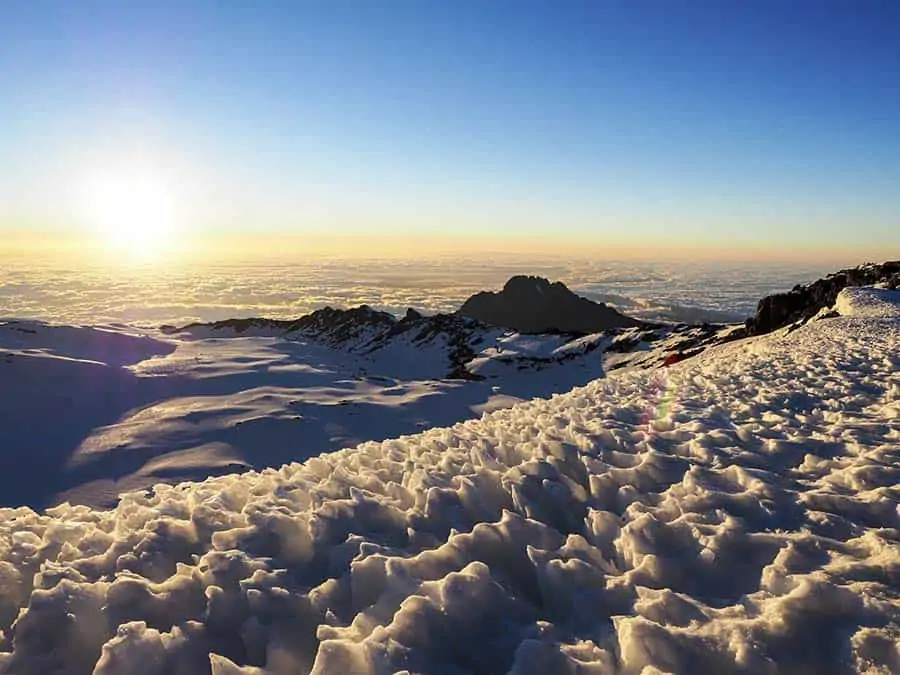
- Reach Uhuru Peak at sunrise
- Descend to lower camps for recovery
This is the toughest part of the journey—physically and mentally—but also the most rewarding.
How Long Does the Descent Take?
Descending Kilimanjaro typically takes 2–3 days, depending on your route.
Descent Breakdown:
- Summit to Base Camp: 4–6 hours
- Base Camp to Forest Zone: Next morning
- Final Descent to Gate: 3–5 hours
Descending is faster but can be hard on the knees. Trekking poles are strongly recommended.
Other Factors That Affect Climbing Duration
1. Weather Conditions
Best climbing seasons:
- January – March: Clear skies, cold nights
- June – October: Dry, stable weather
- Avoid April–May: Heavy rains
- November: Short rains (still possible for experienced hikers)
Bad weather can slow pace, affect visibility, and add an extra acclimatization day.
2. Group Dynamics
Your group’s pace influences daily trekking hours.
- Mixed fitness levels slow the group
- Larger groups need more stops
- Private climbs move at your pace
- Guides adjust speed for safe acclimatization
3. Built-In Buffer Days
Many longer routes include optional buffer days for:
- Weather delays
- Extra acclimatization
- Fatigue recovery
Including a buffer day improves summit success.
Training: How Long Should You Prepare Before Climbing Kilimanjaro?
3–6 Months Before Climb
- Cardio training (running, cycling, swimming)
- Strength training
- Hill hiking with a backpack
- Weekend long hikes
1–2 Months Before Climb
- Increase hiking duration
- Practice with full gear
- Visit high-altitude areas if possible
- Medical check-up
Consistent training ensures stamina and minimizes fatigue at altitude.
Which Climbing Duration Should You Choose?
5-Day Climbs
Only for expert trekkers. High risk of altitude sickness.
6–7 Day Climbs (Recommended)
Best for most climbers—balanced time, cost, and altitude safety.
8–9 Day Climbs (Best Success Rate)
Ideal for first-timers, photographers, older hikers, and anyone prioritizing safety and comfort.
Frequently Asked Questions: How Long Does It Take to Climb Kilimanjaro?
Can very fit people climb faster?
Fitness helps, but altitude acclimatization cannot be rushed. Even elite athletes need slow schedules.
Do I need climbing experience?
No. Kilimanjaro is a trekking peak, not a technical climb.
What’s the minimum safe duration?
Six days. Anything shorter increases altitude sickness risk.
Can the itinerary be customized?
Yes. Glitzy Safaris customizes climbs based on your fitness, travel dates, and preferred route.
Conclusion: How Long Does It Take to Climb Kilimanjaro?
For most climbers, the ideal duration to climb Kilimanjaro is 6–8 days, with longer routes offering safer acclimatization and higher chances of reaching Uhuru Peak. Choosing the right route, training in advance, and climbing with experienced guides all contribute to a successful summit.
Kilimanjaro is more than a mountain—it is a once-in-a-lifetime journey across five ecological zones, from rainforest to arctic summit. With proper planning and the right support, your dream of standing at the top of Africa becomes an achievable and unforgettable reality.
Plan Your Kilimanjaro Climb with Glitzy Safaris
At Glitzy Safaris, we provide:
- Certified, highly experienced mountain guides
- Professional porters and cook teams
- High-quality safety equipment
- Emergency oxygen and daily health checks
- Tailor-made itineraries for all fitness levels
📩 Ready to start your climb? Contact us today to plan your Kilimanjaro adventure with experts who prioritize safety, comfort, and success.