
If you have searched for terms such as Ebola, Ebola Outbreak, Ebola Outbreak Africa, or Ebola Outbreak Tanzania, you have probably come across alarming headlines about the current Ebola situation in Central Africa.
For travelers planning a Tanzania safari, a Mount Kilimanjaro climb, or a Zanzibar beach holiday, one question matters more than any other:
The short answer is yes.
Tanzania remains open to tourism, Tanzania has no active Ebola outbreak, and the country’s major tourism destinations continue operating normally. However, understanding why Tanzania remains safe requires looking beyond headlines and examining the facts.
This guide explains what Ebola is, where the current outbreak is occurring, how Ebola spreads, what health authorities are saying, and what travelers should know before visiting Tanzania in 2026.
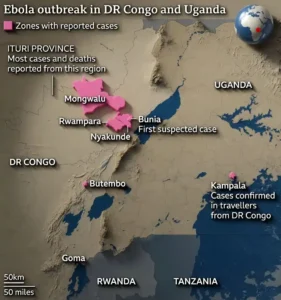
The current Ebola outbreak was officially confirmed in May 2026 in the Democratic Republic of the Congo (DRC). The outbreak is caused by the rare Bundibugyo strain of Ebola, a species for which there is currently no approved vaccine or targeted treatment. The World Health Organization declared the outbreak a Public Health Emergency of International Concern due to the potential risk of regional spread and the challenges of controlling transmission in affected areas.
Health authorities continue responding aggressively with surveillance, testing, treatment centers, contact tracing, and international support. Cases have been reported primarily in parts of eastern DRC, with additional cases confirmed in Uganda.
While the outbreak is serious and deserves global attention, it is important to understand that outbreaks are often highly localized. Media coverage frequently gives the impression that the entire African continent is affected, when the reality is far more specific.
Ebola Virus Disease (EVD) is a severe viral illness that affects humans and some animals.
The disease was first identified in 1976 and has caused multiple outbreaks across Central and West Africa. Ebola belongs to a family of viruses known as orthoebolaviruses and can cause severe illness with high fatality rates if patients do not receive supportive medical care.
One of the most misunderstood aspects of Ebola is how transmission occurs.
Ebola is spread through direct contact with:
The virus can also spread through contact with contaminated materials and infected animals. Importantly, people do not transmit Ebola before symptoms appear.
No.
According to the WHO, CDC, ECDC, and other public health authorities, Ebola is not an airborne disease. It does not spread through casual contact, normal social interaction, or simply being in the same location as someone who is infected.
This distinction is extremely important for travelers because it means ordinary tourism activities do not create a realistic pathway for Ebola transmission.
Symptoms typically appear between 2 and 21 days after exposure, with most cases developing symptoms after approximately 8 to 10 days.
Early symptoms often resemble influenza and may include:
As the disease progresses, symptoms can include:
These symptoms generally occur after direct exposure to an infected individual or contaminated bodily fluids.
This is the question most travelers want answered.
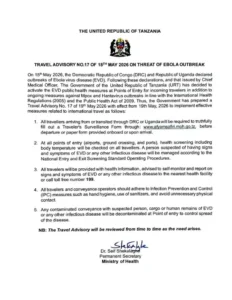
At the time of writing, Tanzania has not been identified as an affected country in the current Ebola outbreak. The outbreak remains centered in specific regions of DRC and Uganda. International monitoring continues across East Africa, but Tanzania’s tourism destinations remain open and operational.
When travelers hear “Africa,” they often assume nearby countries share the same risks.
Africa is enormous.
The distance between eastern DRC and northern Tanzania is substantial. Tanzania’s key tourism destinations—including Serengeti National Park, Ngorongoro Crater, Tarangire National Park, Mount Kilimanjaro, and Zanzibar—are geographically separate from the areas experiencing active transmission.
Geography is one of the primary reasons health authorities assess risk differently for various countries across the region.
Searches for “Ebola Outbreak Tanzania” have increased significantly because travelers want to know whether the outbreak affects their safari plans.
The reality is that Tanzania continues to receive international visitors every day.
Flights continue arriving normally. Safari operators continue running tours. National parks remain open. Lodges continue welcoming guests.
Like many countries in the region, Tanzania monitors regional health developments closely and maintains screening and preparedness procedures when necessary.
Preparedness does not mean active transmission.
In fact, strong preparedness measures are often a sign that a country is proactively protecting public health and tourism.
Based on currently available information, Tanzania remains a safe destination for international travelers.
The factors supporting this assessment include:
Health authorities consistently emphasize that Ebola spreads through direct contact with infected bodily fluids rather than casual travel activities.
Many travelers specifically worry about safari experiences.
Fortunately, safari activities are among the lowest-risk tourism experiences when it comes to Ebola transmission.
Game drives involve open-air vehicles and outdoor environments. Ebola is not spread through the air, and wildlife viewing does not expose travelers to outbreak transmission chains.
Safari lodges operate under standard hospitality and hygiene protocols.
Guests spend their time dining, relaxing, and participating in wildlife activities that have no connection to Ebola transmission pathways.
Professional guides remain one of the most valuable safety resources available to travelers. Reputable safari operators continuously monitor local conditions and government advisories.
Yes.
Serengeti National Park remains one of Africa’s premier wildlife destinations.
The Great Migration continues across the plains, wildlife viewing remains exceptional, and tourism operations continue normally.
The current Ebola outbreak does not affect safari operations within Serengeti National Park.
Yes.
Zanzibar remains fully open to international tourism.
Visitors continue enjoying:
There are no outbreak-related tourism restrictions affecting Zanzibar.
Yes.
Mount Kilimanjaro remains open to climbers from around the world.
Climbing routes, mountain crews, guide services, and accommodation providers continue operating normally.
Travelers planning a Kilimanjaro trek should focus on altitude preparation, fitness, hydration, and proper equipment rather than concerns about Ebola transmission.
One of the most important points rarely discussed in media coverage is that malaria represents a far more relevant health consideration for visitors to Tanzania than Ebola.
Most international travelers will never encounter Ebola.
However, travelers visiting East Africa should actively prepare for mosquito-borne illnesses by:
Practical travel health preparation remains far more important than fear generated by headlines.
No active Ebola outbreak has been reported in Tanzania at the time of writing.
No. Ebola is transmitted through direct contact with infected bodily fluids.
Current information does not support canceling travel to Tanzania solely because of the outbreak in affected countries. Travelers should continue monitoring official travel guidance.
Yes. Serengeti National Park remains open and operating normally.
Yes. Zanzibar continues welcoming international visitors without outbreak-related disruptions.
Yes. Tanzania remains open to international visitors and is not part of the current Ebola outbreak zone. Travelers can continue visiting Tanzania’s national parks, beaches, and tourism destinations while following standard travel health recommendations.
The current outbreak is concentrated in parts of the Democratic Republic of the Congo (DRC) and Uganda. Tanzania’s major tourism destinations, including Serengeti National Park, Ngorongoro Crater, Mount Kilimanjaro, and Zanzibar, are located far from the affected regions.
Travelers should always check their country’s official travel advisory before departure. However, Tanzania is not considered an Ebola outbreak zone, and tourism activities continue normally.
According to health authorities, Ebola does not spread through the air like influenza or COVID-19. Transmission requires direct contact with bodily fluids from an infected person. The risk to ordinary airline passengers is considered extremely low.
Yes. Safari activities such as game drives, wildlife viewing, and staying in safari lodges do not create exposure to Ebola transmission pathways. Visitors are not interacting with outbreak response environments or infected individuals.
Yes. Serengeti National Park, Ngorongoro Crater, Tarangire National Park, Lake Manyara National Park, Ruaha National Park, and Nyerere National Park remain fully open and continue welcoming visitors.
No. Zanzibar has no Ebola outbreak and remains one of East Africa’s most popular beach destinations. Resorts, diving centers, cultural tours, and tourism services continue operating normally.
Based on current public health information, there is no evidence suggesting travelers should postpone or cancel a Tanzania safari due to the Ebola outbreak occurring in other countries.
Travelers should visit a travel clinic before departure, ensure routine vaccinations are up to date, consider malaria prevention medication, purchase comprehensive travel insurance, and follow general hygiene recommendations.
Yes. Malaria is a far more common health concern for visitors to Tanzania than Ebola. Travelers should discuss malaria prevention with their healthcare provider before departure.
Tanzania has not experienced a major Ebola outbreak like those recorded in the Democratic Republic of the Congo, Uganda, Guinea, Sierra Leone, or Liberia. Health authorities continue monitoring regional developments and maintaining preparedness measures.
Tourists participating in normal safari activities are not considered at risk of Ebola transmission from wildlife. Safari experiences take place under controlled conditions with professional guides and established tourism regulations.
Yes. Kilimanjaro remains open to climbers, and the current outbreak does not affect trekking routes, mountain operations, or support services.
Tanzania works with international health organizations and regional public health networks to monitor disease outbreaks, strengthen border screening when necessary, and maintain preparedness measures that help protect residents and visitors.
Travelers should consult reliable sources such as the World Health Organization (WHO), the Centers for Disease Control and Prevention (CDC), the European Centre for Disease Prevention and Control (ECDC), and official government travel advisory websites for the latest information.
The current Ebola outbreak in Central Africa is a serious public health event that deserves attention and international support.
At the same time, travelers should distinguish between the outbreak itself and the realities of visiting Tanzania.
Tanzania is not the outbreak zone.
The Serengeti continues to host one of the greatest wildlife spectacles on Earth. Mount Kilimanjaro continues to attract climbers from around the world. Zanzibar remains one of Africa’s most beautiful island destinations.
The best travel decisions are based on facts, not fear.
For travelers planning a Tanzania safari in 2026, the facts remain reassuring: Tanzania is open, Tanzania is welcoming, and Tanzania continues to offer world-class travel experiences while remaining geographically and epidemiologically separate from the current Ebola outbreak.