
Tanzania Safari: The Complete Guide
Tanzania Safari: The Complete Guide to East Africa’s Greatest Wildlife Destination
If you’ve ever pictured a horizon dark with a million wildebeest, or a lion stretched across a fever tree at golden hour, you’ve already pictured Tanzania. A Tanzania safari isn’t one experience — it’s dozens of them, layered across the largest, most varied collection of national parks in East Africa.
At Glitzy Safaris, we’ve spent over a decade building itineraries across this country, and the thing that surprises first-time travellers most isn’t the wildlife — it’s the scale. Tanzania is East Africa’s second-largest country, and that size translates directly into variety: savannah and rainforest, crater and coastline, crowded migration corridors and parks where you won’t see another vehicle all day.
This guide walks through where to go, when to go, and how to put a Tanzania safari together properly — whether you want the classic Northern Circuit or something far less travelled.
Why a Tanzania Safari Tops Every Serious Traveller's List
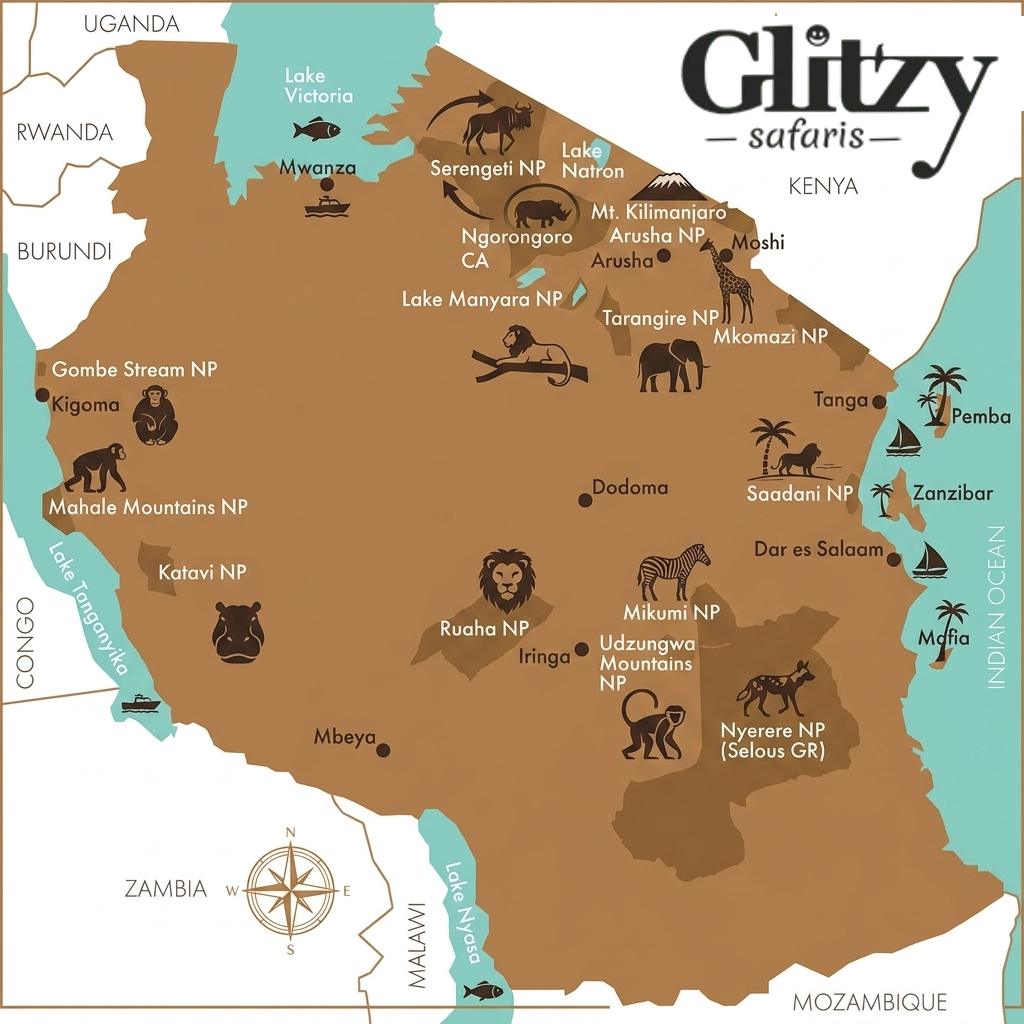
Safari isn’t an add-on activity in Tanzania — it’s the backbone of how the country presents itself to the world, and for good reason. The Serengeti, Tarangire, and Ngorongoro Crater alone would make most countries’ tourism industries. Tanzania has all three, plus Zanzibar’s coral reefs an hour’s flight away.
What sets a Tanzania wildlife safari apart from neighbouring destinations is density combined with variety. You’re not choosing between good wildlife viewing and beautiful landscapes — Tanzania gives you both, often in the same afternoon.
Witness the Great Wildebeest Migration
No wildlife event on Earth moves at this scale. Each year, over two million wildebeest, zebras, and gazelles cross the Serengeti ecosystem in a continuous loop, chasing fresh grazing and rainfall.
This isn’t a single moment you can pin to one week — it’s a year-round movement through the ecosystem, which means the “best” time to see it depends entirely on what you want to witness: river crossings, calving season, or the chaos of predators working the herds. There’s no wrong time to see the migration, only a different chapter of it.
Exceptional Game Viewing, Every Season
Tanzania’s reputation for the Big Five isn’t seasonal hype — it holds up across the calendar, largely because of how its parks are positioned.
Ngorongoro Crater is the standout. This UNESCO World Heritage Site is widely considered the best single location in Tanzania to see the Big Five, thanks to a unique geography that concentrates an extraordinary density of wildlife into one compact, walled caldera. Add cliff-top lodges with views straight down into the crater floor, and you understand why most itineraries treat this as a non-negotiable stop.
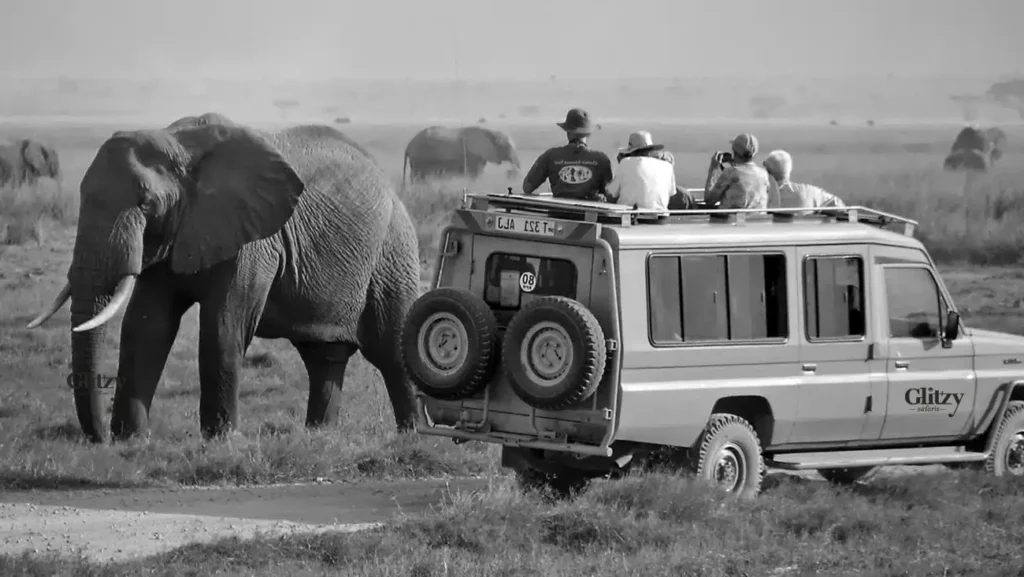
Tarangire National Park trades crater walls for towering baobab trees and some of the largest elephant herds in the region — June to October is peak elephant season here, alongside buffalo and giraffe. It’s also a serious birding destination, with over 550 recorded species.
Lake Manyara National Park offers something different again: boat safaris, flamingo-lined shores, and the rare chance to spot tree-climbing lions — a genuinely unusual behaviour that draws photographers specifically for this park.
Know Where to go For Tanzania Safari
| Destination | Why Go | ||
|---|---|---|---|
| Ngorongoro Crater |
| ||
| Tarangire National Park |
| ||
| Lake Manyara National Park |
| ||
| Ruaha National Park |
| ||
| Nyerere National Park (Selous) |
| ||
| Mahale Mountains National Park |
| ||
| Serengeti National Park |
|
Tanzania Off the Beaten Path: The Parks Most Visitors Never See
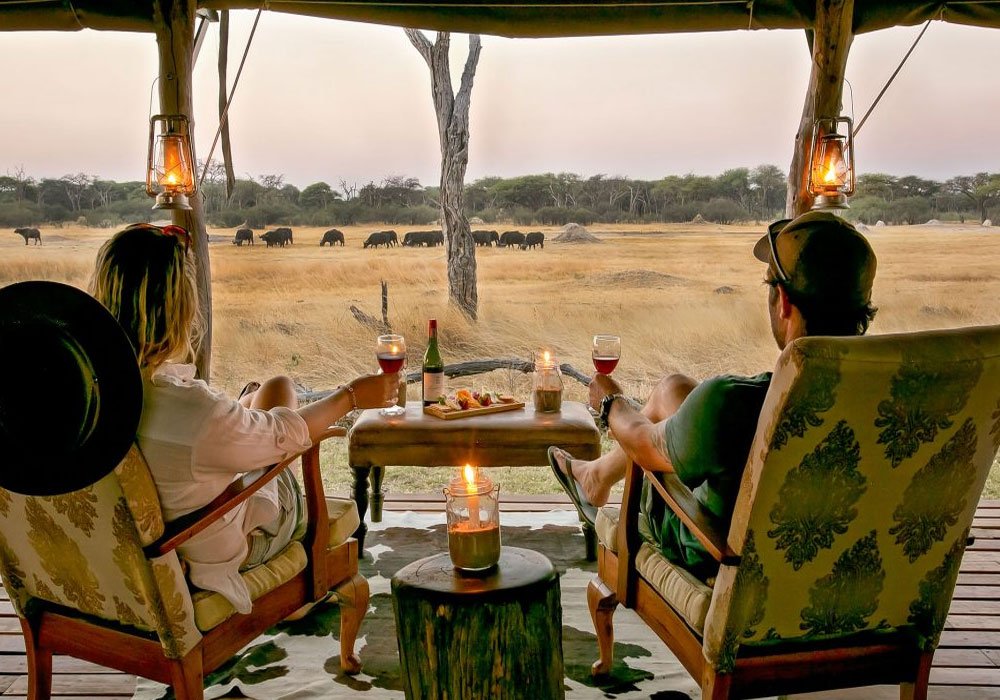
There’s a pattern we see with repeat clients. Their first Tanzania safari is almost always the Northern Circuit — Serengeti, Ngorongoro, maybe Tarangire. Their second trip is almost never the same parks again. They want a Tanzania off the beaten path safari: Ruaha, Nyerere, the parks that don’t show up on the first page of every other operator’s homepage.
Ruaha National Park, in the country’s south, is genuinely remote — getting there usually means a light aircraft transfer rather than a road trip — and that remoteness is exactly the point. It holds Tanzania’s largest elephant population, and because so few vehicles work the park, predator sightings, especially African wild dog, tend to be longer and less crowded than anything you’d get up north.
Nyerere National Park, the renamed and partially re-zoned former Selous Game Reserve, is enormous — one of the largest protected wilderness areas in Africa — and correspondingly wild. Animal numbers here are staggering precisely because human presence is so light: huge herds of elephant, buffalo, and hippo, alongside one of the continent’s last strongholds for the endangered African wild dog.
Mahale Mountains National Park isn’t really a safari park in the traditional sense at all. It sits on the forested shore of Lake Tanganyika, the second-deepest lake in the world, and the main draw is trekking for wild chimpanzees through genuinely remote rainforest — a different kind of physical effort and a completely different kind of payoff than a game drive. Sunset boat cruises on the lake afterward feel like a different country entirely.
Rubondo Island National Park rounds things out with something almost nobody else offers: a pristine island sanctuary in Lake Victoria where you can trek for wild chimpanzees in near-total solitude.
What unites these parks, beyond lower visitor numbers, is what they allow. The Serengeti, for conservation reasons, restricts activities tightly — game drives during daylight, on designated roads, full stop. These southern and western parks allow walking safaris, night drives, off-road tracking, boating, and fishing. If you’ve already done a standard Tanzania safari and want something with more texture and a slower pace, this is genuinely where to look, not just a box to tick for novelty’s sake.
Where the Safari Ends: Zanzibar Islands

Most safaris in Tanzania don’t conclude in the bush. They conclude on a beach, and there’s a practical logic to that beyond just relaxation — after five or six days of early starts and dusty roads, most people are ready for something slower. Tanzania’s flight connections make the transition almost seamless: breakfast at your safari lodge, a short flight, and sunset drinks on white sand the same evening.
Zanzibar is the default choice, and it earns that position. Beyond the postcard beaches, Stone Town carries genuine historical weight — centuries as a trading hub between Africa, the Middle East, and India, visible in its architecture and markets. A Tanzania safari and Zanzibar combination has also become one of the world’s more established honeymoon pairings, which says something about how well it suits couples coming off a week in the bush.
For travellers who want more seclusion, Mnemba Island is a small private-island operation known for exceptional reef diving and a level of exclusivity Zanzibar’s main beaches can’t match. Pemba Island sits further out, less developed, with some of the best diving conditions in the region. And Mafia Island has one standout reason to visit: between October and April, you can swim alongside migrating whale sharks in open water — a genuinely rare wildlife encounter most travellers never get the chance to have.
Mount Kilimanjaro Trekking: Climbing the Roof of Africa
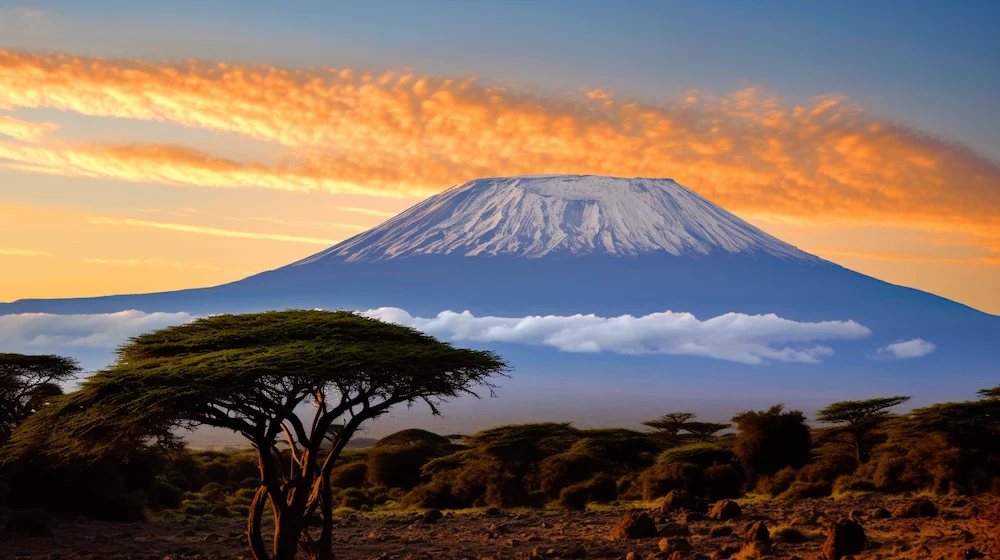
For travellers who want something beyond wildlife entirely, Mount Kilimanjaro is sitting right there, often visible from the plains you’ve just been driving across. It’s Africa’s highest peak and the tallest free-standing mountain on Earth, rising almost 6 kilometers from base to summit.
Mount Kilimanjaro trekking is a serious undertaking, not a casual add-on — most routes take five to nine days, and success rates climb noticeably with the longer, slower itineraries that give your body more time to acclimatize. Several routes exist, ranging in difficulty, scenery, and crowd levels, and the right one depends as much on your fitness and timeline as on personal preference. For travellers who want to combine the two, Kilimanjaro trekking pairs naturally with a Tanzania safari in nearby Tarangire or Ngorongoro, since the logistics barely add extra travel time.
Planning Tanzania wildlife Safari Around the Seasons
Tanzania is a year-round destination, but what you prioritize should genuinely shape when you book.
June through October, the dry season, is when wildlife concentrates predictably around rivers and waterholes as the landscape dries out elsewhere. It’s the easiest season for guaranteed sightings on a Tanzania safari, which is exactly why it’s also the busiest and most expensive.
January through March brings calving season to the southern Serengeti — an intense, fast-moving few months where predator activity spikes around the newborn herds.
March through May, the green season, gets skipped by a lot of travellers, and that’s actually the appeal. Prices drop, parks empty out, and the landscape turns a shade of green most photographs of Tanzania never show. Some camps do close during the heaviest rains, so it takes more careful planning, but the trade-off is real. Whichever window you choose, the best time for a Tanzania safari ultimately comes down to what you most want to see.
Explore our Tanzania safari month by month guide, from Tanzania Safari in January to Tanzania Safari in December, to compare wildlife, weather, and the best travel seasons.
- Tanzania In January
- Tanzania in February
- Tanzania in March
- Tanzania in April
- Tanzania in May
- Tanzania in June
- Tanzania in July
- Tanzania in August
- Tanzania in September
- Tanzania in October
- Tanzania in November
- Tanzania in December
Building Your Tanzania Safari with Glitzy Safaris
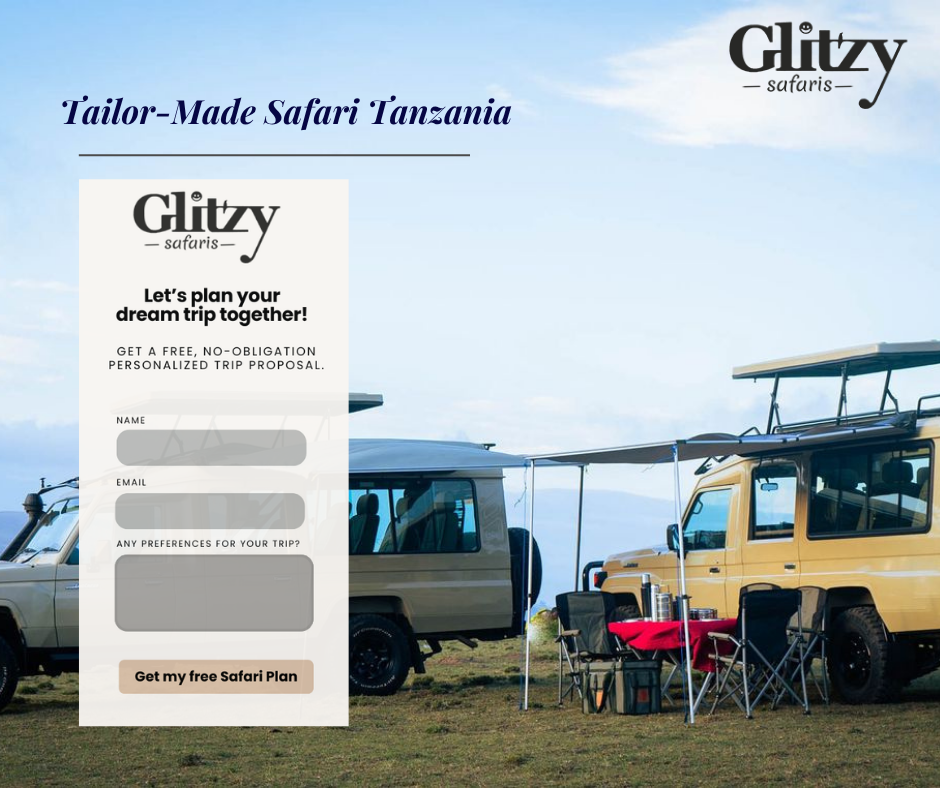
We’ve spent more than 11 years putting Tanzania safari itineraries together, and the honest truth is that no two good trips look alike. Some clients want the classic week — Serengeti, Ngorongoro, finish on Zanzibar. Others want ten days deep in Ruaha and Mahale on a true Tanzania off the beaten path safari, with barely another vehicle in sight. Both are right, depending on what you’re actually after.
Tanzania also combines naturally with neighboring countries if you’re considering a bigger trip — Kenya’s Masai Mara for an extended migration experience, or gorilla trekking in Uganda and Rwanda.
If you’re ready to start putting your own Tanzania safari together, get in touch and we’ll build it around what you actually want to see, not a template.
What travellers most enjoyed about Tanzania
Bird watching

Cultural interactions

Hot air ballooning

Mobile camping
Private concessions and conservancies

Scenery
Wildebeest Migration
Wildlife and safari
Bird watching
Cultural interactions
Hot air ballooning
Mobile camping
Private concessions and conservancies
Scenery
Wildebeest Migration
Wildlife and safari
Explore these Tanzania Resources
Experience the thrill of a lifetime on a Tanzania safari, where dreams of the wild come alive. Choose from our all time popular safari tours.

Start Planning Your Custom Safari Adventure
Let us create your tailor-made trip
Receive a free, no obligation quote
Glitzy Safari on Trip Advisor
Here’s what our travelers have to say about their experiences with Glitzy Safaris



 Verified
 Verified
 Verified
 Verified
 Verified
 Verified
 Verified
 Verified
 Verified
 Verified