
A Tanzania safari in January delivers one of the most extraordinary wildlife spectacles on Earth — the wildebeest calving season on the southern Serengeti plains. This is the moment when hundreds of thousands of calves are born within weeks of each other, predators move in from across the ecosystem, and the plains around Ndutu turn into the most intense theatre of life and survival anywhere in Africa. It is dramatic, deeply moving, and it happens right here in Tanzania every single January.
January also brings something else that serious safari travellers value enormously. Visitor numbers are lower than peak dry season, accommodation rates at many camps are more accessible, and the landscape is so lush and green that photographs taken in this month look entirely different from anything taken in July or August. The Serengeti in January is not the dusty, golden savanna of the dry season. Instead, it is a vivid, rain-fed green with dramatic skies and soft morning light that wildlife photographers specifically travel for.
This guide covers everything you need to know about a Tanzania safari in January. By the end, you will understand exactly what to expect, which parks to prioritise, what the weather means for your game drives, and why January is one of the most rewarding months in the entire Glitzy Safaris calendar.
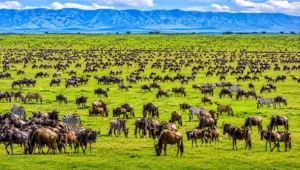
January sits at a fascinating point in the Tanzanian wildlife calendar. It falls at the tail end of the short rains, which means the landscape is at its most verdant. At the same time, the heaviest downpours have already begun to ease, and long stretches of clear sunshine define most mornings.
In the northern safari circuit — which covers the Serengeti, Ngorongoro, Tarangire, and Lake Manyara — daytime temperatures sit comfortably between 25°C and 29°C. Mornings and evenings are noticeably cooler, particularly at higher altitude destinations like Ngorongoro, where nights can drop to around 13°C. In practical terms, this means comfortable game-driving conditions for the best parts of every day.
What makes January genuinely exceptional, however, is not the weather. It is what the weather triggers. The nutrient-rich short grass of the southern Serengeti plains, freshened by the rains, draws the great wildebeest herds south from the central Serengeti. More than a million wildebeest and hundreds of thousands of zebras and gazelles gather on the Ndutu plains to give birth. Nearly half a million calves are born within a matter of weeks. That concentration of new life, and the predator response it creates, is why January belongs on every serious safari traveller’s shortlist.
Understanding the January weather pattern is essential for setting the right expectations before you travel.
The short rains in Tanzania typically run from November through to late December. By January, rainfall is easing and the classic pattern becomes established: clear, sunny mornings ideal for game drives, followed by a short afternoon shower that passes within an hour or two, followed again by fresh golden light in the late afternoon. Your morning and evening drives — the most productive times for wildlife activity in any case — are rarely disrupted.
In most cases, no. Rain in January tends to arrive in short, sharp afternoon bursts rather than sustained all-day downpours. Game drives that depart at first light and return to camp around midday, then head out again in the late afternoon, follow the rain pattern naturally. Moreover, the rain often enhances rather than hinders the experience. Dramatic storm clouds build over the plains as the afternoon progresses. The light after a shower is soft, golden, and unlike anything available in the dry season. Many of the finest wildlife photographs taken in the Serengeti ecosystem are captured in January precisely because of these conditions.
This is an important distinction to make clearly. January is a genuinely difficult month for the southern circuit parks — Ruaha National Park and Nyerere National Park both experience heavy rainfall during this period, with hot and humid conditions that make game viewing considerably harder. As a result, a Tanzania safari in January is firmly a northern circuit experience. The Serengeti, Ndutu, Ngorongoro, Tarangire, and Lake Manyara are all performing well. The south is better saved for a return visit between June and October.
The Serengeti in January is primarily a southern story. Understanding this geography helps you plan where to position yourself and why it matters so much.
From late December onward, the great wildebeest herds begin moving south from the central Serengeti as the short rains turn the southern grass green and nutritious. By January, the herds are settling into the Ndutu and Salei plains in preparation for the peak birthing period. The movement is not a single dramatic crossing like the Mara River events of July and August. Instead, it is a gradual, vast settling of animals across a landscape that seems almost impossibly full of life.
The southern Serengeti plains in January are also the finest place in Africa to see cheetah. The flat, open terrain allows them to hunt at full speed, and the density of prey on the calving grounds means cheetah are active, visible, and hunting regularly. On a private Serengeti safari in January, your Glitzy Safaris guide has the flexibility to spend real time with individual cheetah — watching, waiting, and following a hunt as it unfolds rather than moving on because the group has a schedule.
The wildlife profile of a Serengeti safari in January is defined by two things: the sheer concentration of herbivores on the southern plains, and the predator response that concentration attracts.
Lions and hyenas are the most visibly active predators during the calving season. They position themselves on the edges of the herds and take advantage of vulnerable newborns with a regularity that, while difficult to watch at times, is among the most honest displays of how the Serengeti ecosystem actually works. Leopards favour the acacia woodlands surrounding the Ndutu lakes, where they can ambush prey and retreat into the canopy. Cheetahs, as mentioned, are at their most visible and active on the open grass.
Beyond predators, the supporting cast is remarkable. Zebra herds follow the wildebeest closely. Giraffes move through the acacia woodland margins. Thomson’s and Grant’s gazelles dot the plains in huge numbers. Eland move in loose groups across the Salei plains. And the birdlife in January is extraordinary — European and North African migratory birds arrive in large numbers during this period, making January one of the finest birding months in the entire year.
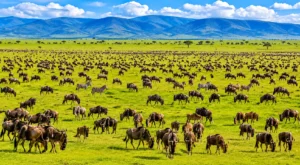
No discussion of a Tanzania safari in January is complete without a dedicated focus on Ndutu. It is the single most important destination in the January wildlife calendar, and understanding it properly shapes your entire itinerary.
The Ndutu region occupies a unique geographical position between the Ngorongoro Conservation Area and the southern Serengeti. This dual-park status means that following the herds sometimes carries your game drive across the invisible boundary between the two protected areas — a seamless experience on the ground that requires a guide who knows both ecosystems intimately. Every Glitzy Safaris guide working the January calving season is experienced in exactly this fluid, cross-boundary game tracking.
During the calving season, over 8,000 wildebeest calves are born daily at the peak of the season. The plains around Lake Ndutu and Lake Masek become one of the most intensely active wildlife areas in the world. Predators gather in extraordinary density. Lions that usually hold territories across the central Serengeti shift southward to follow the herds. Hyena clans are at their most active and aggressive. Cheetahs are everywhere on the open grass.
Furthermore, Ndutu in January produces photographic conditions that are arguably the finest in the entire East African safari calendar. The lush green plains, the dramatic clouds, the soft post-rain light, and the sheer density of wildlife in every direction create an environment where experienced photographers spend weeks and still feel they have not captured everything.
Three to five nights in the Ndutu area is the Glitzy Safaris recommendation for January visitors. The calving season rewards patience above everything else. On any given day, the density and location of the herds shifts with the grass condition, the weather, and the movement of predator territories. Three nights gives your guide enough time to track the herds’ current position, identify the most active predator areas, and show you the full range of what January in Ndutu actually delivers. A single-night stop here is genuinely like reading the first chapter of a book and then putting it down.
The southern Serengeti and Ndutu area is the headline destination for a Tanzania wildlife safari in January. A camp positioned close to the calving grounds is the most important accommodation decision of the January itinerary. Glitzy Safaris specifically selects camps in this area with access to both the Serengeti park side and the Ngorongoro Conservation Area side of Ndutu, giving maximum flexibility to follow the herds wherever they move on any given day.
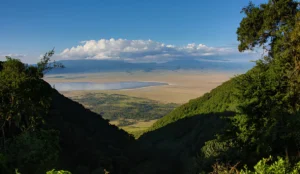
Ngorongoro is one of Tanzania’s finest year-round destinations, and January is no exception. The crater floor holds a permanently resident population of all Big Five species — lion, leopard, elephant, buffalo, and black rhino — in a self-contained ecosystem that delivers consistently outstanding wildlife viewing in every month of the year.
In January specifically, the crater floor is at its most lush and green. The landscape is more beautiful than at any other time of the year, and the wildlife density remains as extraordinary as ever. Additionally, because most January visitors focus their attention on the Ndutu calving grounds, the crater receives somewhat fewer vehicles than during the July-to-October peak. A private Glitzy Safaris drive on the Ngorongoro crater floor in January is among the most uncrowded and personal ways to experience this iconic destination.
Tarangire in January is in a different mode compared to its famous dry-season persona, but it remains a deeply rewarding park to visit. The elephant herds are present and active throughout January, moving through a landscape of ancient baobab trees that are dramatically green against the sky in ways the dry season simply cannot match.
The birdlife in Tarangire in January is particularly exceptional. European migratory species are in residence alongside the park’s permanent residents, and the combination of woodland, open savanna, and the Tarangire River corridor creates an extraordinary diversity of habitat within a relatively compact area. For Glitzy Safaris guests who carry binoculars and have an interest in birds alongside the mammals, a January visit to Tarangire adds a completely different dimension to the northern circuit experience.
Lake Manyara works well as either an opening destination or a one-night addition to a January northern circuit itinerary. The park’s famous tree-climbing lions are present year-round, and the soda lake often holds large flocks of flamingos in January when water levels are right. The groundwater forest along the park’s western edge is at its most lush in this month, creating deeply shaded and beautiful game-drive conditions through one of Tanzania’s most diverse woodland habitats.
A private Tanzania safari in January is not simply a comfort upgrade. In this specific month, it is a genuine performance difference in the quality of your wildlife experience.
The calving season at Ndutu is dynamic and fast-moving in a way that the dry season is not. Herds shift position daily as they follow the freshest grass. Individual predator events — a cheetah making a kill, a pride of lions working the edge of a calving herd, a hyena clan challenging a leopard over a carcass — unfold over hours rather than minutes. On a shared group safari, the vehicle has a schedule and other guests with different priorities and energy levels. On a private Glitzy Safaris safari, your guide makes every decision in real time based entirely on what is happening directly in front of you.
Beyond the flexibility, a private safari in January means precise vehicle positioning for the light conditions. Overcast mornings and the post-rain golden light of late afternoon are extraordinary for photography. Your guide positions the vehicle upwind, at the correct angle to the subject, and stays in position as long as the scene requires. There is no negotiation with other guests. There is no pressure to move on. The experience is entirely yours.
Yes — with the right itinerary and the right expectations, January is an outstanding time for a Tanzania safari. Here is an honest summary of both sides.
The advantages are significant. The calving season is one of the most powerful wildlife events in the world and is available only in this January-to-March window. The landscape is at its most beautiful and photogenic. Accommodation rates at many camps are lower than peak July-to-October season. Visitor numbers in most parks are thinner than during peak months. Birdlife is at its annual best across the entire northern circuit.
The considerations are manageable. Afternoon showers are a feature of January rather than a problem, but a lightweight waterproof layer belongs in your day pack. The southern circuit parks are not recommended in January due to heavy rainfall. Mosquitoes are more active in January than in the dry season, which makes malaria prophylaxis and a quality insect repellent non-negotiable rather than optional. Finally, the Ndutu calving season has become increasingly well known, and the best camps in the calving area book up months in advance. Planning ahead is essential.
This itinerary is designed specifically around the January wildlife calendar. It builds from Tarangire through the crater and into the Ndutu calving grounds, where it spends its most time.
Day 1 — Arrive Arusha. Transfer to your Arusha lodge. Evening briefing with your Glitzy Safaris guide team covering the itinerary, wildlife expectations, and packing advice for the week ahead.
Day 2 — Tarangire National Park. Drive south from Arusha to Tarangire. Afternoon game drive along the Tarangire River — elephant herds, baobab landscapes, and exceptional birding. Overnight in or adjacent to the park.
Day 3 — Tarangire Full Day. A full day dedicated to Tarangire with morning and afternoon game drives. No rushing. No compromises. This day is about depth in a single remarkable destination.
Day 4 — Ngorongoro Crater. Transfer to the Ngorongoro Conservation Area. Afternoon descent into the crater for Big Five game viewing. Overnight on the crater rim with panoramic views across the caldera.
Day 5 — Ngorongoro to Ndutu. Early morning crater drive at first light, catching predators before the heat builds. Transfer south to Ndutu in the afternoon. First evening in the calving grounds.
Day 6 — Full Day Ndutu. Sunrise drive into the calving herds, midday rest at camp, late afternoon predator tracking. This is the day the entire itinerary has been building toward, and your guide will ensure every hour of it counts.
Day 7 — Ndutu Morning Drive and Departure. Final morning game drive in the Ndutu area or the southern Serengeti plains. Transfer back to Arusha or fly out from a nearby airstrip. Onward to Zanzibar or home.
Is January a good time for a Tanzania safari?
Yes, and for the northern circuit specifically, January is one of the most rewarding months in the entire calendar. The calving season in the southern Serengeti and Ndutu is a wildlife experience that exists nowhere else on Earth, and it is available only in this January-to-March window. Combined with lower visitor numbers and beautiful green landscapes, it is an outstanding time to visit.
What is the calving season and when exactly does it peak?
The calving season is the period when the wildebeest herds of the Serengeti ecosystem move south to the nutritious short-grass plains of Ndutu to give birth. January is when the herds are arriving and births are beginning in earnest. February is the statistical peak, when the highest number of calves are born daily. March is when the herds begin moving west as the long rains approach. For the best combination of herd arrival, predator concentration, and manageable weather, January is the ideal entry point into this season.
Which parks should I prioritise on a Tanzania safari in January?
The southern Serengeti and Ndutu area are the headline destinations. Ngorongoro and Tarangire are excellent additions. Lake Manyara works well as a shorter stop. The southern circuit parks — Ruaha and Nyerere — should be avoided in January due to heavy wet season rainfall.
How does January compare to the dry season for wildlife viewing?
The dry season offers more predictable game viewing in the sense that animals concentrate tightly around permanent water sources, making sightings reliable and often spectacular. However, January offers the calving season — an intensity of predator-prey drama that the dry season simply cannot replicate. Both are excellent times to visit Tanzania. They are, however, genuinely different experiences, and the calving season has a raw emotional power that many experienced safari travellers describe as the most affecting wildlife experience of their lives.
What should I pack for a Tanzania safari in January?
Lightweight neutral-toned clothing in khaki, olive, or sand is essential — camouflage is restricted in Tanzania and should not be packed. A light waterproof jacket for afternoon showers, a wide-brimmed sun hat, quality sunscreen, and sunglasses cover the daily essentials. Binoculars and a camera with a telephoto lens are strongly recommended. Insect repellent and malaria prophylaxis are non-negotiable in January.
How far in advance should I book a January Tanzania safari?
The calving season at Ndutu has become one of the most sought-after wildlife events in Africa, and the best-positioned camps book up months in advance. Glitzy Safaris recommends booking six to twelve months ahead for peak calving weeks in late January and February to secure both your preferred camp and the best private vehicle availability.
Is a private Tanzania safari in January worth the investment?
For the calving season specifically, a private safari makes a more significant difference than at almost any other time of year. The ability to follow individual predator events, stay in position as long as a scene requires, and move dynamically with the herds rather than on a fixed schedule turns a good January safari into an extraordinary one. At Glitzy Safaris, every January itinerary is built around private vehicles precisely because the calving season rewards that flexibility above everything else.
January is a month that rewards those who plan properly and book early. The calving season at Ndutu fills up fast. The best-positioned camps in the southern Serengeti ecosystem are limited in number. Moreover, the private safari experience in January — with a Glitzy Safaris guide and vehicle entirely at your disposal — makes the difference between witnessing the calving season and truly being inside it.
At Glitzy Safaris, we design private Tanzania safari in January itineraries built entirely around this wildlife window. Camp selection, park routing, and daily game-drive planning are all handled by our team in Arusha. You arrive, and your January safari begins immediately.
Get in touch with your travel dates and we will put together a personalised itinerary and quote within 48 hours.
Glitzy Safaris is a specialist Tanzania safari operator based in Arusha. All itineraries are tailor-made, privately guided, and designed around what Tanzania is doing at the exact moment you visit.
Explore our Tanzania safari month by month guide, from Tanzania Safari in January to Tanzania Safari in December, to compare wildlife, weather, and the best travel seasons.