
Discover why a Tanzania safari in October is one of the smartest moves on the safari calendar — and why experienced travelers keep booking it with Glitzy Safaris.
If you have been researching the best time for a Tanzania safari, you have probably seen July and August get most of the attention. Peak season has its appeal, no question. But a Tanzania safari in October offers something different — and in many ways, something better.
October sits at the tail end of Tanzania’s dry season, just before the short rains arrive in November. For you as a traveler, this translates into a powerful combination: fewer crowds, more competitive pricing, and wildlife still highly concentrated around water sources. Animals haven’t dispersed yet, roads are firm and drivable, and you share game drives with far fewer vehicles than you would in August.
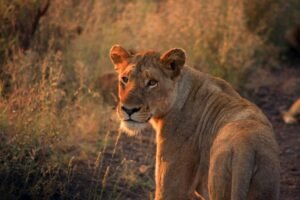
October is also one of the most photogenic months on the continent. The golden dry-season light begins to soften, occasional dramatic clouds build on the horizon without much actual rain, and the Serengeti shifts from dusty golden-brown to the first hints of green. If you want Africa to look the way it does in every great wildlife documentary, this is your month.
In short, an October Tanzania safari gives you most of what peak season offers — exceptional wildlife, the Great Migration in motion, warm temperatures — without the premium price tag or the convoys of vehicles at every sighting. At Glitzy Safaris, we consider October one of our most rewarding months to operate, and our guests consistently agree.
Understanding Tanzania safari weather in October helps you pack smart and sets the right expectations for your trip.
October falls at the very end of the long dry season. Temperatures are warm, ranging from roughly 20°C to 30°C (68°F to 86°F) across most of the northern safari circuit. The Serengeti plains can feel hotter at midday, while higher-altitude areas like the Ngorongoro Crater rim drop to a cool 12°C–15°C at night — so layers are essential.
Rainfall is minimal through most of October. Toward the final week of the month, brief afternoon showers may arrive as the short rains build. These showers are rarely disruptive — they tend to be short and refreshing, and they do wonders for the scenery. The bush begins to smell alive again after months of dry heat.
Overall, Tanzania safari weather in October is highly favorable — warm, mostly dry, and transitioning into something greener and more dramatic by the day.
Tanzania covers a vast area with a remarkable range of ecosystems. Knowing where to focus your Tanzania wildlife safari in October makes a significant difference in what you experience. Glitzy Safaris designs all October itineraries around the parks that perform best at this specific time of year.
The Serengeti is the heart of any serious Tanzania safari in October. The northern Serengeti, particularly along the Mara River corridor, still holds large wildebeest concentrations through much of October. The central Serengeti around Seronera offers exceptional year-round wildlife — resident lion prides, cheetah, and elephant herds that follow no migration calendar.
A Serengeti safari in October also rewards visitors who explore beyond the obvious zones. The western corridor sees far fewer tourists than the north and yet produces outstanding wildlife encounters — large hippo pods in the Grumeti River, topi on the open plains, and impressive predator activity throughout.
The Ngorongoro Crater delivers remarkable wildlife viewing in any month, but October is particularly rewarding. The crater floor supports one of the densest concentrations of wildlife on Earth — lion prides, elephant bulls, the rare black rhino, hippo pools, flamingos, and large herds of wildebeest and zebra that never migrate out.
In October, the grass on the crater floor remains relatively short before the rains arrive, making sightings more frequent and photography cleaner. It is one of the most reliable stops on any best Tanzania safari in October itinerary that Glitzy Safaris puts together.
October is arguably the single finest month to visit Tarangire — making it essential on any Tanzania wildlife safari in October. During the dry season, the Tarangire River becomes the only reliable water source for hundreds of kilometers in every direction, drawing elephant gatherings that will genuinely stop you cold.
Herds of 50, 100, sometimes 200 elephants move toward the river at dusk. Combined with ancient baobab landscapes and excellent big cat activity following the herds, Tarangire in October rivals the Serengeti for sheer spectacle.
Lake Manyara is often treated as a quick half-day stop. In October, it deserves more — flamingos, tree-climbing lions, and forest elephant sightings make it a genuinely rewarding park at this time of year.
For travelers wanting to escape the tourist trail entirely, Tanzania’s southern circuit shines in October. Ruaha National Park offers raw, uncrowded wilderness with large lion prides, African wild dog sightings, and enormous elephant populations. Nyerere National Park — the largest game reserve in Africa — comes alive with boat safaris on the Rufiji River that are unlike anything else on the continent.
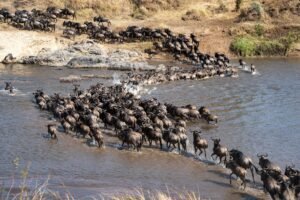
One of the most important questions for anyone planning a Tanzania safari in October is where the Great Migration is — and what you can realistically expect to witness.
The Great Migration Tanzania October phase is what wildlife experts describe as the southern migration transition. This is not a single event with a fixed start and end date. It is a continuous, year-round movement of approximately 1.5 million wildebeest, plus hundreds of thousands of zebra and gazelle, circling through the greater Serengeti-Mara ecosystem.
In early October, large concentrations of wildebeest remain in and around the northern Serengeti and Masai Mara region. Mara River crossings — the dramatic, predator-charged spectacles that define the migration’s most famous images — may still occur. Booking the first two weeks of October and positioning yourself in the northern Serengeti gives you the best realistic chance of witnessing one.
As the month progresses, the herds begin their journey southward through the central Serengeti, heading toward the short-grass plains around Ndutu where calving season begins in January. This southward movement is itself a remarkable spectacle — vast columns of animals stretching to the horizon, moving with a purposeful, ancient energy.
Many travelers assume October falls “after” the migration. This fundamentally misunderstands what the Serengeti migration in October actually offers. What you can expect includes late Mara River crossings in the north during early October, massive wildebeest concentrations moving through the central corridor, and intense predator activity as lion, cheetah, leopard, hyena, and wild dog follow the herds south. Perhaps most importantly, you experience all of this with dramatically fewer safari vehicles — creating the kind of private, immersive encounter that peak-season visitors rarely get.
The Great Migration Tanzania October is not the end of the show. At Glitzy Safaris, we tell our guests the same thing every year: it is the beginning of an entirely different act — one that most tourists never see.
Here is a focused breakdown of where to concentrate your Tanzania wildlife safari in October, based on what each park does best at this specific time of year:
Best for: Elephant herds, dry-season wildlife concentration, baobab landscapes October highlight: Highest elephant density of the year; excellent lion and leopard activity
Best for: Great Migration wildebeest, Mara River crossings, big cat sightings October highlight: Late-season river crossings; quieter than peak July–August
Best for: Year-round resident wildlife, leopard, lion, cheetah October highlight: Wide-open visibility before the rains; consistently outstanding big cat sightings
Best for: Black rhino, elephant bulls, dense multi-species wildlife October highlight: Shorter grass improves visibility; calm, uncrowded conditions
Best for: Waterbirds, tree-climbing lions, forest elephant encounters October highlight: Flamingos and pelicans building ahead of the rains
Best for: Off-grid Tanzania safari experience, large carnivores, African wild dog October highlight: Peak dry-season wildlife concentration; exceptional for serious wildlife photographers
Packing correctly for a Tanzania safari in October makes the difference between a comfortable, focused experience and a frustrating one. October’s transitional weather demands both sun protection and warmth.
Health note: Consult your doctor about malaria prophylaxis at least 6–8 weeks before travel. An October Tanzania safari carries a moderate malaria risk in lower-altitude areas. Ngorongoro’s higher elevation carries lower risk, but prophylaxis is widely recommended regardless.

October falls in the shoulder season pricing window — genuinely good news for your budget. Expect costs roughly 15–30% lower than peak season July–August rates, depending on the camp category and operator.
| Safari Level | Approximate Daily Cost Per Person |
|---|---|
| Budget camping safaris | $150 – $250 |
| Mid-range lodge safaris | $350 – $600 |
| Luxury tented camps | $700 – $1,500+ |
Rates typically include accommodation, meals, game drives, and park fees. International flights are separate. Glitzy Safaris offers a range of Tanzania safari packages in October across all three tiers, with itineraries designed specifically around October’s wildlife movements.
For Tanzania safari October 2026, early booking is strongly advised. October’s reputation among experienced safari travelers is growing every year. The best small-group camps — particularly in Tarangire and the northern Serengeti — sell out 6 to 12 months in advance. Waiting until mid-year to book an October departure risks finding your preferred properties fully committed.
How many days do you need? A minimum of 7 days covers the northern circuit well. Ten to twelve days allows you to add Lake Manyara, spend additional nights in different Serengeti zones, and experience the migration across multiple areas.
Fly between parks or drive? Internal charter flights are a worthwhile investment. The drive from Arusha to the northern Serengeti alone takes most of a full day — flying returns those hours to actual game drives.
Choose smaller camps over large lodges October is ideal for Tanzania’s intimate, owner-run camps that limit guests to 12–20 people. The difference in experience compared to large hotels is substantial — personalized guiding, flexible timing, and genuine immersion in the landscape.
Combine with Zanzibar After a week on safari, Zanzibar’s Indian Ocean beaches make a perfect contrast. October is one of the finest months to visit the island — warm, sunny, and quiet before European winter holiday crowds arrive.
Is October a good month for a Tanzania safari? Yes — a Tanzania safari in October is one of the best choices you can make. Wildlife is highly concentrated, the Great Migration is actively moving through the Serengeti, Tarangire reaches peak elephant density, and pricing is more competitive than peak season.
Will I see the Great Migration during an October Tanzania safari? Yes. The Great Migration Tanzania October experience includes late-season Mara River crossings in the northern Serengeti during early October, followed by the dramatic southward movement of vast wildebeest herds through the central Serengeti. It is a different phase from August — but no less extraordinary, and far less crowded.
Is October too hot for safari in Tanzania? October is warm but entirely manageable. Midday averages reach 28–30°C on the Serengeti plains. Game drives are scheduled in the cool early morning and late afternoon — the hours when wildlife is most active anyway.
Does it rain a lot during an October Tanzania safari? Mostly no. October remains within the dry season, though the short rains typically begin building in late October. Brief afternoon showers may occur in the final week but rarely disrupt game drives and often produce spectacular photography light.
Is Tanzania safe for safari travel in October? Tanzania is widely considered one of the safer safari destinations in Africa. The northern circuit is well-established and regularly visited by international travelers year-round. Comprehensive travel insurance is always strongly recommended.
Should I book independently or through a safari operator? For first-time visitors especially, booking with a reputable guided operator like Glitzy Safaris is strongly recommended. Tanzania’s national parks require registered local guides, and a knowledgeable guide will transform the depth and quality of your wildlife experience in ways that independent travel simply cannot replicate.
A Tanzania safari in October is not a compromise or a backup plan. It is a genuinely outstanding time to experience one of the greatest wildlife destinations on Earth — with exceptional animals, the Serengeti migration still in full motion, the finest elephant viewing on the continent at Tarangire, and a landscape shifting from golden dry season into vivid, rain-kissed green.
You will have the northern Serengeti to yourself in a way that August visitors rarely experience. Elephant herds 200-strong will move to the Tarangire River at sunset in front of you. From the Ngorongoro rim, you will watch clouds roll across a crater floor teeming with life — and feel, genuinely, that you are somewhere extraordinary.
At Glitzy Safaris, we have been running Tanzania safari holidays in October for years, and it remains one of our most celebrated months. The combination of value, wildlife quality, and atmosphere is simply hard to beat anywhere else on the calendar.
Book early for 2026, choose a camp with a small guest limit, and trust a specialist who knows the parks in October intimately.
Africa in October will not disappoint.
Explore our Tanzania safari month by month guide, from Tanzania Safari in January to Tanzania Safari in December, to compare wildlife, weather, and the best travel seasons.