
If you’ve been dreaming of Africa’s greatest wildlife spectacle, a Tanzania safari in February is the month to make it real. Planning a February Tanzania safari puts you at the heart of the Great Migration calving season. This is one of the most emotionally powerful wildlife events on Earth. At Glitzy Safaris, we’ve guided hundreds of travelers through Tanzania’s wilderness across every season. The best Tanzania safari in February consistently delivers what no other month can match. Whether you’re drawn by a Serengeti safari in February or the drama of a Tanzania Migration Safari February, this guide covers everything you need.
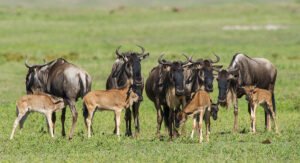
Most travelers assume safari season peaks between July and October. Those classic dry months bring animals to waterholes and river crossings to social media feeds. Undeniably, those months are spectacular. However, they also bring packed game-drive tracks, inflated lodge rates, and crowds at every sighting.
A February Tanzania safari tells a completely different story. February sits within Tanzania’s green season but coincides with a natural dry interlude. Consequently, you get lush landscapes, extraordinary predator action, and a bush that feels genuinely yours to explore.
Here is what sets a Tanzania safari in February apart:
At Glitzy Safaris, clients who experience the best Tanzania safari in February consistently rate it among the greatest trips of their lives. Many return specifically during this month year after year.
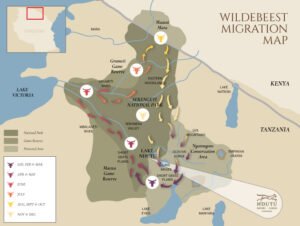
Knowing where to go matters just as much as knowing when. Tanzania spans nearly 945,000 square kilometers. Different parks shine at very different times of year. For a Tanzania Safari February itinerary, Glitzy Safaris focuses on these essential destinations:
At least two nights at Ndutu should be non-negotiable for any February Tanzania safari visitor. Located at the intersection of the Serengeti ecosystem and the Ngorongoro Conservation Area, this stretch of open short-grass plains is the undisputed calving season epicenter.
The flat terrain allows visibility for miles. You’ll watch dramatic predator-prey interactions without a single tree obstructing your view. On top of that, the concentration of wildebeest, zebra, and Thomson’s gazelles is genuinely staggering. Cheetah sightings at Ndutu rank among the most reliable anywhere in Africa. Large lion prides operate in well-fed groups, often with cubs born specifically during this period.
Glitzy Safaris Tip: Book a full-day drive rather than the standard morning-and-evening format. Remarkably, some of Ndutu’s most dramatic predator activity unfolds between 10am and 2pm. That’s precisely when most tour groups have returned to camp for lunch.
Offering extraordinary game viewing across its southern and central zones, a Serengeti safari in February rewards visitors in ways peak-season visits often cannot. While Ndutu technically sits at the Serengeti’s southern edge, the broader southern Serengeti teems with equal wildlife intensity throughout January and February.
Southern Serengeti: Herds drift continuously between Ndutu and the southern Serengeti during this period. You’ll witness the same calving drama here, with slightly more varied terrain. Rocky kopjes, acacia woodland edges, and open plains create habitat for an impressive range of species.
Central Serengeti (Seronera): This zone hosts resident wildlife year-round. It delivers lion prides that rank among the most studied in Africa, leopards draped across fig trees — Seronera holds the highest leopard density in the entire park — and hippo pools framed by lush green vegetation throughout February.
Northern Serengeti (Lobo Area): Migration herds have moved south by February. Nevertheless, this remote region boasts strong resident wildlife and an untouched wilderness atmosphere. Many seasoned safari-goers find it deeply appealing precisely because of its solitude.
A full-day Ngorongoro Crater descent belongs on every Tanzania safari February itinerary. This ancient volcanic caldera spans roughly 260 square kilometers of concentrated wilderness. It functions as a self-contained ecosystem delivering outstanding game viewing throughout the year. In February specifically, the lush green crater walls create a dramatic backdrop to every sighting below.
Consistently delivering black rhino encounters — one of Africa’s most endangered species — the Crater also hosts large lion prides, enormous bull elephants, and thousands of flamingos painting the alkaline lake pink. Glitzy Safaris always builds this descent into our February itineraries. As you emerge onto the Crater floor through cloud forest, the sheer scale of what surrounds you becomes breathtakingly clear.
Frequently overlooked in favor of more famous parks, Tarangire National Park is a magnificent addition to any best Tanzania safari in February itinerary. Celebrated for ancient baobab trees and one of Tanzania’s largest elephant concentrations, it surprises first-time visitors with its sheer wildlife density.
The Tarangire River never fully dries. As a result, it acts as a year-round wildlife magnet drawing animals from across the wider ecosystem. The park’s unique mix of acacia woodland, marshland, and open grassland creates outstanding habitat diversity. Tree-climbing lions are occasionally spotted here — a rare behavior documented in very few places on Earth. Birdlife in February is exceptional, with over 550 recorded species present throughout the month.
Often treated as a transit stop, Lake Manyara deserves a dedicated half-day or full-day visit on any February Tanzania safari itinerary. The soda lake turns pink with flamingo flocks. The groundwater forest teems with baboons and vervet monkeys. Open woodlands offer rewarding leopard and lion sightings. For photographers especially, the birding here in February is world-class — and the lake views are unlike anything else in Tanzania.
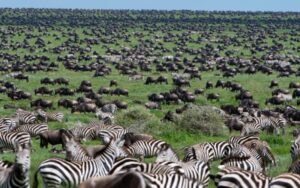
The Tanzania Migration Safari February experience centers on one of the natural world’s most awe-inspiring events. Understanding what actually happens transforms the experience from impressive to genuinely profound.
The Great Migration is not a single event. Rather, it’s a continuous year-round movement of approximately 1.5 million wildebeest, 300,000 zebras, and 500,000 Thomson’s gazelles. These animals follow a vast clockwise circuit through the Serengeti-Mara ecosystem, always chasing fresh grass. By February, they’ve swept south into the Ndutu area and southern Serengeti. That’s precisely when calving begins — and when the Tanzania Migration Safari February experience reaches its dramatic peak.
Between late January and mid-March, the wildebeest calving season produces a spectacle even veteran wildlife professionals find moving. During peak calving, up to 8,000 calves are born every single day. Each calf stands within minutes of birth and runs within hours — an extraordinary evolutionary adaptation. Additionally, the mass simultaneous birth is a survival strategy: by overwhelming predators with sheer numbers, more calves survive than if births were spread throughout the year.
As a direct consequence, every predator in the ecosystem converges on the calving grounds. Lions, cheetahs, leopards, hyenas, and wild dogs all arrive on the plains. Layered, multi-species drama unfolds in every direction around your vehicle. This concentration of action is the defining reason why Glitzy Safaris rates the best Tanzania safari in February so highly.
Your guide departs camp before sunrise, the air cool and smelling of damp grass. Within twenty minutes, a cheetah appears, scanning the plains for an isolated calf. Meanwhile, 500 meters away, a wildebeest birth is already underway. By 9am, you’ve watched a cooperative lion hunt and photographed a hyena clan at a fresh kill. This layered, simultaneous action fundamentally separates a February Tanzania safari from every other month on the safari calendar.
Planning a successful Tanzania Safari February trip requires an honest look at the climate. Contrary to popular belief, February is far more manageable than its green-season label suggests.
| Region | Daytime Temp | Night Temp | Rainfall | Humidity |
|---|---|---|---|---|
| Serengeti South / Ndutu | 28–34°C | 15–19°C | Low–Moderate | Low–Moderate |
| Ngorongoro Crater | 20–26°C | 10–14°C | Low–Moderate | Moderate |
| Tarangire | 28–34°C | 16–20°C | Low | Low |
| Lake Manyara | 26–32°C | 15–18°C | Low–Moderate | Moderate |
| Arusha (Gateway City) | 22–28°C | 14–17°C | Moderate | Moderate |
Many travelers hear “green season” and picture relentless downpours ruining every game drive. In practice, however, February’s rain arrives as short afternoon showers — not all-day events. Morning game drives are almost always dry and clear. Furthermore, roads in Tanzania’s main parks are well-maintained and fully passable with 4×4 vehicles. Glitzy Safaris uses 4×4 vehicles as standard across all Tanzania safari February itineraries.
Green landscapes also create far more dramatic photography than dusty dry-season conditions. Animals don’t disappear when rainfall arrives. In areas like Ndutu, the green season actually concentrates wildlife in highly predictable, photogenic locations.
Clothing essentials:
Gear and accessories:
For photographers:
Lion (★★★★★) February is arguably the best month for active lion sightings in East Africa. Vulnerable calves trigger intense pride hunting behavior. As a result, you’ll witness cooperative hunts, large feeding gatherings, and playful cubs with remarkable frequency throughout the day.
Leopard (★★★★☆) Seronera in the central Serengeti remains one of the best places globally for reliable leopard sightings. In February, extra prey density brings these elusive cats into the open more frequently. Additionally, the Ngorongoro Crater offers excellent leopard opportunities for those spending time on the rim.
Elephant (★★★★★) Exceptional elephant encounters are available throughout February across all major parks. Tarangire offers the highest densities. Nevertheless, these magnificent animals are equally common across the Serengeti, Ngorongoro, and Lake Manyara. The green season draws them into more open landscapes where visibility is excellent.
Buffalo (★★★★★) Large buffalo herds graze the lush grasslands consistently throughout February. Typically surrounded by oxpecker birds, they offer one of safari’s most endearing daily scenes. Their presence also signals other predators are nearby — always worth noting on your game drive.
Black Rhino (★★★☆☆) Tanzania’s black rhino population is small and concentrated primarily in the Ngorongoro Crater. Sightings are never guaranteed. However, the Crater gives visitors the best chance of encountering this critically endangered species anywhere in East Africa. Early morning descents before 7am offer the highest probability.
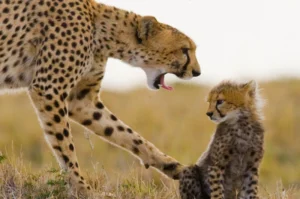
Cheetah (★★★★★) Without question, February is peak cheetah season across the Serengeti safari in February landscape. Open Ndutu plains suit these speed hunters perfectly. Several female cheetahs with cubs have established territories that Glitzy Safaris guides know intimately and locate reliably.
Wild Dog (★★★☆☆) African wild dogs are nomadic, so their presence is never guaranteed on any single game drive. Nevertheless, Ruaha National Park hosts one of Africa’s strongest wild dog populations. It’s a worthwhile extension for any serious wildlife traveler adding to their Tanzania safari in February itinerary.
Hippo (★★★★★) February’s rainfall fills Tanzania’s rivers and pools to capacity. This creates ideal hippo conditions across the ecosystem. Seronera River pools, Ngorongoro Crater lake edges, and Tarangire’s marshes are all consistently productive hippo viewing spots throughout the month.
Flamingo (★★★★★) Both Lake Manyara and the Ngorongoro soda lake host extraordinary flamingo numbers in February. Thousands of lesser and greater flamingos create a pink haze across the water. This is one of Africa’s most photogenic avian spectacles and a highlight of any best Tanzania safari in February itinerary.
One of the most consequential decisions in planning a Tanzania Migration Safari February experience is exactly where to base yourself. Positioning matters enormously. Getting it right can be the difference between good and extraordinary game viewing.
Best for: Migration calving, cheetah, peak predator action, open plains photography Recommended stay: 3–4 nights minimum — non-negotiable for any February Tanzania safari Ideal camp style: Mobile or semi-permanent tented camps within or immediately adjacent to Ndutu
Best for: Resident lion prides, leopard tracking, year-round wildlife variety Recommended stay: 2–3 nights as a complement to your southern Serengeti days Ideal camp style: A mix of classic lodges and tented camps, including several iconic historic properties
Best for: Hippo spectacle along the Grumeti River, exclusive game viewing, exceptional birding Recommended stay: 1–2 nights as a worthwhile addition to a longer itinerary Ideal camp style: Exclusive-use camps with very low visitor density throughout February
Best for: Remote wilderness, beautiful rocky kopje landscape, resident wildlife without migration crowds Recommended stay: 1–2 nights for those seeking genuine solitude on their Tanzania Safari February trip Ideal camp style: High-end exclusive tented camps with the lowest visitor numbers of any Serengeti zone
Day 1: Arrive at Kilimanjaro International Airport. Transfer to Arusha for a welcome dinner at your hotel.
Day 2: Fly directly to Ndutu airstrip. After landing, head into your first afternoon game drive across the calving plains. Sundowners on the open grassland follow as the sun drops below the horizon.
Days 3–4: Two full days in Ndutu at the heart of your Tanzania Migration Safari February experience. Pre-dawn departures capture intense predator activity. On Day 4, a packed picnic lunch keeps you in the bush — because leaving for camp means missing something spectacular.
Day 5: Transfer to Ngorongoro. Afternoon rest and briefing at your crater-rim lodge before tomorrow’s descent.
Day 6: Full-day Ngorongoro Crater descent — a highlight of any best Tanzania safari in February itinerary. Return to the rim in time for sunset dinner overlooking the caldera.
Day 7: Morning drive to Tarangire. Full afternoon game drive among baobabs and elephant herds follows.
Day 8: Final morning game drive in Tarangire before transferring to Arusha for your afternoon departure flight.
Days 1–2: Arrive and overnight in Arusha. A cultural visit to a Maasai community provides a meaningful introduction to the people who share this landscape with its extraordinary wildlife.
Days 3–5: Three full days in Ndutu and the southern Serengeti — the undisputed heart of any Tanzania Safari February itinerary. Morning and full-day drives run with Glitzy Safaris’ senior naturalist guides.
Days 6–7: Central Serengeti for resident pride tracking, leopard sightings, and Seronera River hippo pool visits. Resident wildlife here provides excellent variety alongside the calving plains experience from earlier in the trip.
Day 8: Ngorongoro Crater full-day descent with a packed lunch eaten on the Crater floor itself.
Day 9: Lake Manyara for flamingos, groundwater forest exploration, and world-class bird photography. This completes the northern Tanzania circuit beautifully.
Day 10: Tarangire National Park for a final morning among giant elephants and ancient baobabs before returning to Arusha.
Day 11: Transfer to Arusha and depart.
Day 1: Arrive Arusha. Brief orientation with your Glitzy Safaris consultant and overnight.
Days 2–3: Ndutu — the absolute essential core of any February Tanzania safari, regardless of budget or trip length. Two full days of calving-season game drives follow your arrival.
Day 4: Ngorongoro Crater full-day descent. This combination of Ndutu and Ngorongoro represents the best compact Tanzania safari in February experience available.
Day 5: Tarangire morning game drive before returning to Arusha for the evening.
Day 6: Depart.
Absolutely — Glitzy Safaris ranks it among the top three months to visit Tanzania. The calving season, predator activity, and crowd-free game viewing create an experience rivaling any other time on the calendar, including the famous dry season river crossings.
Expect warm days of 28–34°C, cool evenings around 14–19°C, and mostly dry mornings with occasional afternoon showers. The landscape is lush and photogenic — dramatically different from dusty dry-season conditions most people associate with safari.
Throughout February, the herds concentrate on the Ndutu plains and southern Serengeti. That’s precisely where Glitzy Safaris focuses our Tanzania Migration Safari February itineraries. This is the calving season’s epicenter and the most dramatic phase of the entire migration cycle.
Tanzania is one of Africa’s most stable and tourist-friendly countries. Additionally, Glitzy Safaris provides comprehensive pre-travel guidance covering health requirements, safety protocols, and practical logistics for every client before departure.
Yes — malaria prophylactics are strongly recommended for all Tanzania visitors. Consult your travel doctor or GP at least four to six weeks before departure. Different medications suit different travelers, so professional medical advice is essential.
Glitzy Safaris strongly recommends booking at least 6–9 months in advance. Ndutu accommodation has limited capacity and fills quickly despite being low season. The best camps at the most competitive rates consistently disappear first.
At Glitzy Safaris, we don’t offer one-size-fits-all tours. Instead, every Tanzania safari in February is crafted around the specific rhythms of the season, the ecosystem, and the individual traveler in front of us.
Deep Local Knowledge: Our guides are born and raised in Tanzania. Knowing the Ndutu plains and Seronera valley not from a guidebook but from years of daily game drives, they bring insight that transforms good sightings into extraordinary ones.
February-Specific Expertise: Over many years of running best Tanzania safari in February itineraries, we’ve refined every detail — which camps offer the best calving-ground access, how to structure daily drives, and where the resident cheetah families are most consistently found.
Tailored for Every Traveler: Whether you’re a first-time safari-goer, a wildlife photographer, a family with children, or a couple on honeymoon, Glitzy Safaris designs February Tanzania safari itineraries around your priorities and pace.
Complete Transparency: No hidden costs and no surprise extras. Our Tanzania Safari February packages are clearly priced to take full advantage of green-season rates — delivering exceptional value at every budget level.
Support From First Inquiry to Final Transfer: From visa guidance and health advice through to airport pickups and post-safari logistics, the Glitzy Safaris team remains present at every step of your journey.
The world’s most dramatic wildlife moment doesn’t happen at a river crossing. Rather, it happens on the golden-green plains of Ndutu at 6:30 in the morning — when a newborn wildebeest takes its first shaking steps and a cheetah watches from 200 meters away, quietly deciding whether to move.
Raw, unscripted, and utterly unrepeatable — that is what a Tanzania safari in February delivers in extraordinary abundance. Less crowded than July, more dramatic than September, and more affordable than peak season, a February Tanzania safari with Glitzy Safaris offers some of the most concentrated wildlife action on the planet.
Whether it’s your first time in Africa or your tenth, the best Tanzania safari in February will leave you changed. The Serengeti safari in February calving plains, the timeless stillness of Ngorongoro Crater, and the thundering drama of the Tanzania Migration Safari February combine to create something no photograph can fully capture.
Glitzy Safaris is ready to make your February Tanzania safari everything you’ve imagined — and considerably more.
Contact Glitzy Safaris today to begin planning your February safari. Our expert consultants will design your perfect itinerary, recommend the best-positioned camps, and handle every detail from first conversation to final departure.
Explore our Tanzania safari month by month guide, from Tanzania Safari in January to Tanzania Safari in December, to compare wildlife, weather, and the best travel seasons.