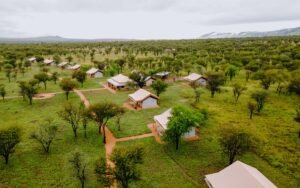
A Tanzania safari in March is not for everyone — and that honesty is exactly why it suits certain travelers perfectly. March falls in the heart of Tanzania’s long rains, which means some lodges close, some roads get muddy, and the Serengeti landscape turns a dramatic, saturated green. However, for travelers who plan carefully, choose the right destinations, and travel with experienced guides, a March Tanzania safari can deliver extraordinary wildlife encounters at a fraction of peak-season prices.
At Glitzy Safaris, we believe in giving you the full picture — not just the highlights. This guide covers everything honestly: the Tanzania Safari March weather realities, where the migration sits, which parks perform well, and which ones to avoid. Whether you’re researching a Serengeti safari in March, tracking the Tanzania Migration Safari in March, or simply looking for the best Tanzania safari in March experience your budget can deliver, you’ll find realistic, practical answers here.
March is Tanzania’s wettest month. The long rains typically begin in mid-to-late March and intensify through April and May. Rainfall is heavier and more prolonged than the short rains of November, and some days bring continuous downpours rather than brief afternoon showers.
That said, March is not a write-off. Far from it. Here’s a balanced view:
What works well in March:
What requires realistic expectations:
The key is choosing the right parks, staying at the right camps, and traveling in early-to-mid March rather than late March if possible. Glitzy Safaris plans every March Tanzania safari with these realities built into the itinerary from day one.
Understanding the Tanzania Safari March weather is the single most important factor in planning a successful trip. Here is what you can realistically expect across Tanzania’s key safari regions:
| Region | Daytime Temp | Night Temp | Rainfall | Road Conditions |
|---|---|---|---|---|
| Serengeti South / Ndutu | 26–32°C | 15–18°C | Moderate–High | Generally passable with 4×4 |
| Central Serengeti (Seronera) | 26–32°C | 15–18°C | Moderate–High | Mostly passable; some tracks muddy |
| Ngorongoro Crater | 18–24°C | 10–14°C | Moderate | Generally good; crater descent road manageable |
| Tarangire | 28–34°C | 16–20°C | Low–Moderate | Good; drier than Serengeti |
| Ruaha National Park | 28–35°C | 17–21°C | Low–Moderate | Good; one of March’s best-performing parks |
| Arusha | 20–26°C | 13–16°C | Moderate–High | Urban roads fine |
Many travelers imagine rain ruining their entire game drive. In reality, March rain in the Serengeti typically follows a pattern: mornings are often clear and bright, mid-afternoon brings cloud buildup, and heavy rain arrives in the late afternoon or evening. This means morning game drives — the most productive wildlife-viewing window anyway — frequently escape the worst of the weather entirely.
Nevertheless, late March can bring full-day rain events that genuinely limit game-drive time. Glitzy Safaris always builds flexibility into Tanzania Safari March itineraries for exactly this reason, including indoor photography sessions, bush meals under canvas, and afternoon wildlife talks when conditions outside are difficult.
Choosing the right parks transforms a potentially difficult March visit into a genuinely rewarding one. Some parks handle March conditions exceptionally well. Others struggle significantly. Here is Glitzy Safaris’ honest assessment:
For the best Tanzania safari in March, Ruaha National Park is our top recommendation. Located in central Tanzania, Ruaha sits in a semi-arid zone that receives far less rainfall than the northern parks. Even during the long rains, Ruaha remains accessible, game-rich, and deeply rewarding.
Ruaha is Tanzania’s largest national park and one of Africa’s most undervisited. In March specifically, the park delivers:
Furthermore, Ruaha’s camps remain open throughout March, its roads drain quickly after rain, and the park receives far fewer visitors than the northern circuit even in peak season. In March, you may have vast stretches of wilderness entirely to yourself.
Tarangire is another strong performer for a March Tanzania safari. Its sandy, well-draining soils mean roads recover quickly after rain, and the Tarangire River provides a reliable year-round wildlife anchor.
In March, Tarangire delivers:
Tarangire works especially well as a two-to-three night component of a broader Tanzania safari in March itinerary that also includes Ruaha or the Ngorongoro Crater.
The Ngorongoro Crater is genuinely one of Tanzania’s most reliable wildlife destinations in any month, and March is no exception. Its unique geography — a self-contained ecosystem within volcanic walls — protects it somewhat from the disruption that heavy rains bring to open savannah parks.
March specifically brings the Crater into extraordinary condition:
The crater rim descent road can become slippery in heavy rain, but Glitzy Safaris uses experienced drivers with well-maintained 4×4 vehicles on all descents. A crater visit in March is very manageable with proper preparation.
A Serengeti safari in March requires careful planning and realistic expectations. The park is vast, and conditions vary enormously depending on which zone you visit.
What works in the Serengeti in March:
The central Serengeti around Seronera remains one of the best zones. Its resident lion prides and leopard population deliver year-round regardless of rain. The kopje landscapes drain quickly, and the resident wildlife — buffalo, giraffe, zebra, warthog, and impala — remains dense and active throughout March.
The southern Serengeti and Ndutu area can still be productive in early March. The tail end of calving season may still be visible in the first two weeks, and predator activity remains elevated. However, by mid-March, the migration herds begin moving north and the calving concentration dissipates.
What requires caution in the Serengeti in March:
Some of the smaller side tracks in the Serengeti’s lower-lying areas become genuinely impassable by late March. The western corridor can flood significantly. Several mobile camps in Ndutu begin breaking down in mid-to-late March as the season ends. Glitzy Safaris always checks current camp and road conditions before confirming Serengeti safari in March itineraries, and we update clients regularly as departure dates approach.
Selous / Nyerere National Park: This vast southern park receives heavy March rainfall and many camps close entirely. Access becomes difficult and game viewing can be significantly compromised. Glitzy Safaris does not recommend Nyerere for March visits.
Mahale Mountains (Chimpanzee Trekking): The trekking trails become extremely slippery and the chimps move to higher, less accessible forest in heavy rain. March is not the recommended month for this experience.
Gombe Stream: Similar challenges to Mahale in terms of trail conditions and chimp accessibility during the long rains.
Understanding the Tanzania Migration Safari in March requires honesty about what stage the migration has reached and what it means for your experience on the ground.
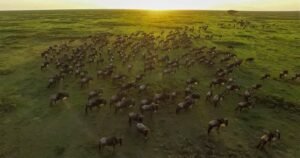
By March, the Great Migration is in transition. In early March, the tail end of calving season may still be visible in the Ndutu area and southern Serengeti, with some predator activity around late-born calves. However, as March progresses, the herds begin their gradual northward drift toward the central and eventually northern Serengeti.
This transition means:
The honest truth is this: if your primary goal is witnessing the dramatic calving season or a specific migration spectacle, February delivers this experience far more reliably than March. However, if you’re flexible in your expectations and excited by the broader wildlife experience — big cats, elephants, birds, and open wilderness — a Tanzania Migration Safari in March still delivers enormously.
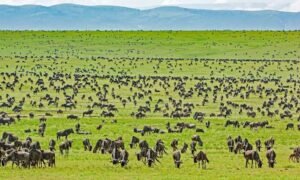
Rather than the dense, thundering herds of calving season, March migration sightings tend to involve smaller groups of wildebeest and zebra moving steadily northward across the Serengeti plains. Your guide will track their movement daily, positioning your vehicle along likely routes and waiting for the herds to pass. It’s a quieter, more contemplative form of migration viewing — and for many travelers, deeply rewarding in its own right.
Even setting aside the migration, a Tanzania safari in March delivers outstanding wildlife across multiple species. Here is what thrives specifically in March conditions:
Lion (★★★★☆) Lion activity remains strong throughout March across all major parks. In Ruaha especially, lion prides are large and frequently active, benefiting from the elevated prey availability that the green season brings. Seronera’s resident prides in the central Serengeti deliver reliable sightings regardless of the rains.
Leopard (★★★★☆) March is genuinely good for leopard. The dense green vegetation of the long rains provides excellent cover, meaning leopards feel secure and move more freely during daylight hours. Seronera, Ruaha’s rocky escarpments, and Tarangire’s riverine forest are the most productive leopard zones in March.
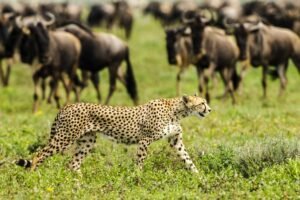
Cheetah (★★★☆☆) Cheetah sightings decrease slightly in March compared to the open-plains conditions of the dry season. The longer grass of the green season reduces visibility for both the cheetah and for your vehicle. Nevertheless, the Ndutu plains and southern Serengeti still produce cheetah encounters in early March when the short grass remains.
Wild Dog (★★★★☆) March is an excellent month for wild dog in Ruaha, where large packs are actively denning or raising pups born in June-July of the previous year. These are among the most accessible wild dog encounters available anywhere in Africa.
Elephant (★★★★★) March brings elephants into excellent condition after the rains. Large herds gather near rivers and seasonal waterholes across Tarangire, Ruaha, and the Serengeti. Bulls in musth are frequently encountered, displaying impressive behavior around breeding herds.
Buffalo (★★★★★) Large buffalo herds graze the lush green grasslands throughout March. Their numbers are dense and their condition excellent after the first rains have brought through fresh vegetation. These herds attract significant lion attention, making buffalo-and-predator encounters particularly dramatic.
Giraffe (★★★★★) March’s lush acacia canopy is ideal giraffe habitat. These animals are in outstanding condition in the green season, and their tall profiles against vivid green backgrounds make for extraordinary photography throughout the month.
Birds (★★★★★) March is genuinely one of Tanzania’s greatest months for birdlife — and this is not a consolation prize. It is a genuine highlight. Migratory species from Europe and Asia are still present. Resident species are in breeding plumage. Waterbirds crowd every seasonal pool and river crossing. For dedicated birders, March in Tanzania rivals any month on the continent.
Specific highlights include:
This itinerary focuses on the most reliable parks for a best Tanzania safari in March experience, avoiding areas that struggle with heavy rain while maximizing wildlife diversity.
Day 1: Arrive Kilimanjaro International Airport. Transfer to Arusha. Welcome dinner and overnight.
Day 2: Morning drive to Tarangire National Park. Afternoon game drive among elephant herds and ancient baobabs. Overnight Tarangire.
Day 3: Full-day Tarangire game drive. Focus on the riverine forest for leopard and the open floodplains for lion and cheetah. Overnight Tarangire.
Day 4: Transfer to Ngorongoro. Afternoon walk on the crater rim with views over the caldera. Overnight crater-rim lodge.
Day 5: Full-day Ngorongoro Crater descent. Picnic lunch on the crater floor among the wildlife. Return to rim for sunset.
Day 6: Morning drive to Central Serengeti (Seronera). Afternoon game drive focusing on resident lion prides and Seronera River leopards. Overnight Seronera area.
Day 7: Full-day Central Serengeti game drive. Sundowner on a kopje as the Serengeti turns gold in the late light.
Day 8: Morning game drive before transfer to Arusha for departure flight.
For many travelers, the southern circuit in March outperforms the northern circuit entirely. This itinerary centers on Ruaha — March’s outstanding performer.
Day 1: Arrive Dar es Salaam or Kilimanjaro. Overnight in transit hotel.
Day 2: Fly to Ruaha National Park. Afternoon game drive immediately upon landing. Overnight Ruaha.
Days 3–5: Three full days in Ruaha. Focus on wild dog tracking, lion pride movements, and the Great Ruaha River wildlife corridor. Full-day drives on Days 4 and 5.
Day 6: Fly to Zanzibar for a two-night beach extension — an ideal way to relax after intensive game driving.
Day 7: Full day on Zanzibar. Spice tour, Stone Town exploration, or simply relaxing on the beach.
Day 8: Return flight to Dar es Salaam or direct to your international connection.
For those with limited time who want the best Tanzania safari in March in a compact format:
Day 1: Arrive Arusha. Overnight.
Day 2: Full-day Tarangire game drive. Overnight Tarangire.
Day 3: Ngorongoro Crater full-day descent. Overnight crater rim.
Days 4–5: Central Serengeti (Seronera) — resident wildlife, kopjes, and Seronera River. Two game drives daily.
Day 6: Transfer to Arusha for departure.
March accommodation requires specific knowledge. Some properties close entirely in late March through May. Others reduce to skeleton staff. Glitzy Safaris works only with properties that maintain full service and guiding quality throughout March, and we verify current operational status before confirming every booking.
Ultra-Luxury:
Luxury:
Mid-Range:
Budget:
March is a challenging month — but not a bad one if you plan correctly. Heavy rainfall, some camp closures, and the dispersal of migration herds are genuine constraints. However, outstanding wildlife viewing, low prices, and minimal crowds make it a genuinely rewarding option for the right traveler. Glitzy Safaris helps you decide honestly whether March suits your specific goals.
Ruaha National Park is our top recommendation for March. It receives less rainfall than the northern parks, remains fully operational, delivers outstanding predator and elephant encounters, and offers one of Africa’s best wild dog experiences. Tarangire and Ngorongoro Crater are also strong options.
March is Tanzania’s wettest month overall. Daytime temperatures remain warm at 26–34°C depending on the region, but rainfall is heavier and more sustained than in January or February. Morning game drives are frequently dry; afternoon and evening rain is common. Northern parks receive more rain than southern parks like Ruaha.
In early March, the tail end of calving season may still be visible in the southern Serengeti. By mid-to-late March, however, herds begin their northward movement and become dispersed. A Tanzania Migration Safari in March is possible and rewarding in early March, but February offers a more dramatic and concentrated experience.
Many are, but not all. Some mobile camps in Ndutu and the southern Serengeti close in mid-to-late March. Most permanent lodges in Tarangire, Ngorongoro, and Ruaha remain open year-round. Glitzy Safaris verifies every property’s operational status before booking any March itinerary.
Yes — significantly. March rates are among the lowest of the entire year, making it one of the most budget-accessible months for Tanzania safari. Luxury camps that cost $1,000+ per person per night in July often drop to $500–$700 in March. Glitzy Safaris passes these savings directly to clients while maintaining the same guiding quality.
Planning a Tanzania safari in March requires a level of expertise that goes beyond simply booking flights and lodges. It demands current knowledge of road conditions, camp operational status, wildlife movement patterns, and weather forecasting — all of which change week by week during the long rains.
At Glitzy Safaris, this is precisely our area of strength.
Honest Advice First: We tell clients the truth about March. If February or July better suits your wildlife goals, we say so. Our reputation is built on clients who return — and they return because we gave them accurate expectations, not inflated promises.
Current, On-the-Ground Intelligence: Our guides and camp partners across Tanzania provide weekly updates throughout the green season. Consequently, when you book a March Tanzania safari with Glitzy Safaris, your itinerary is built on current conditions rather than outdated seasonal guides.
Flexible Itinerary Design: March requires flexibility. We build contingency options into every itinerary — alternative game drive routes, backup accommodation options, and indoor activities for heavy-rain days — so your experience is never derailed by weather.
Southern Circuit Specialists: While most safari companies focus almost exclusively on the northern circuit, Glitzy Safaris has deep expertise in Ruaha and Tanzania’s southern parks — which happen to be March’s outstanding performers. This knowledge gives our March clients a genuine advantage.
Full Support Throughout: From your first inquiry through to your final transfer home, our team remains accessible and responsive. During March’s unpredictable weather, this continuity of support matters more than in any other month.
A Tanzania safari in March is ideally suited to a specific kind of traveler. Understanding whether that’s you saves both time and disappointment.
March suits you well if:
March may not suit you if:
March is Tanzania’s most honest safari month. It doesn’t promise the dramatic river crossings of July or the concentrated calving spectacle of February. What it does promise — if you plan carefully with experienced operators like Glitzy Safaris — is genuine wilderness, outstanding predator viewing, extraordinary birdlife, minimal crowds, and some of the most dramatic green-season landscapes in Africa.
Ruaha wild dogs hunting at dawn. A leopard stretched across a rain-darkened fig tree in Tarangire. Thousands of flamingos on a flooded Ngorongoro lake. Buffalo herds moving through vivid green grass with lion prides following at a distance. These are March’s gifts — and they are considerable.
A March Tanzania safari with Glitzy Safaris rewards the traveler who comes with open eyes, realistic expectations, and genuine curiosity about the natural world in all its moods.
Contact Glitzy Safaris today to discuss whether a March Tanzania safari is the right choice for you. Our consultants will give you an honest assessment, recommend the best parks for your travel dates, and build an itinerary designed specifically for March conditions.
Explore our Tanzania safari month by month guide, from Tanzania Safari in January to Tanzania Safari in December, to compare wildlife, weather, and the best travel seasons.