Planning a private safari in Tanzania is one of the most exciting travel decisions you will ever make. Yet one question comes up more than any other during the planning process — what is the best month for a private safari Tanzania?
The honest answer is that Tanzania offers rewarding wildlife experiences throughout the entire year. Nevertheless, each month brings something different to the table. The dry season delivers exceptional game viewing. In contrast, the green season transforms the landscape into something breathtaking. Calving season, on the other hand, brings predator drama unlike anything else in Africa. Therefore, the best month for your safari depends entirely on what you want to see and experience.
At Glitzy Safaris, we have guided guests through every single month of the Tanzania safari calendar. As a result, this guide shares exactly what each month delivers — so you can choose with confidence.
Tanzania’s wildlife does not stay still. Animals follow rainfall, grass growth, and water sources across a landscape that changes dramatically from season to season. Furthermore, the Great Migration — the greatest wildlife spectacle on Earth — moves continuously through the ecosystem on a monthly cycle.
Choosing the right month means you will be in the right park at the right time for the wildlife you want to see. Moreover, it means avoiding unnecessary crowds, getting the best value for your budget, and experiencing Tanzania’s landscape at its most beautiful. In other words, timing is everything on a Tanzania safari.
A well-planned Tanzania safari season guide puts all of this information in one place — so your private safari delivers exactly what you came for.
Before going month by month, it helps to understand Tanzania’s two main seasons and how they shape the safari experience.
| Season | Months | Character |
|---|---|---|
| Dry Season | June – October | Best game viewing, cooler temperatures, peak prices |
| Hot Dry Season | January – February | Calving season, excellent predator activity |
| Short Rains | November – December | Green landscape, fewer tourists, lower prices |
| Long Rains | March – May | Lush scenery, quietest period, lowest prices |
Neither season is bad for a private safari. However, each delivers a fundamentally different experience. Understanding what matters most to you — wildlife density, photography conditions, budget, or crowd levels — is therefore the starting point for choosing your ideal month.
Overall rating: Excellent
January is one of the most underrated months on the entire Tanzania safari calendar. During this period, the southern Serengeti around Ndutu comes alive with calving season — approximately 500,000 wildebeest calves born within a six-week window attract extraordinary predator concentrations.
Because so many vulnerable newborns are present simultaneously, predator activity reaches some of the most intense levels seen anywhere in Africa. Lions hunt in coordinated prides across the short-grass plains. Cheetahs actively target newborn calves throughout the day. Meanwhile, hyena clans shadow the herds around the clock, creating constant drama from sunrise to sunset.
Additionally, the open short-grass plains of the southern Serengeti provide visibility stretching for kilometres — making wildlife spotting exceptionally productive. Since January also sits between the two rain seasons, weather conditions are generally excellent. Furthermore, accommodation rates are more competitive than peak season, making it outstanding value.
Best parks in January: Southern Serengeti, Ngorongoro Crater, Tarangire
| Wildlife | Activity Level |
|---|---|
| Wildebeest calves | Exceptional |
| Lion and cheetah | Exceptional |
| Elephant | Very good |
| Black rhino | Very good |
| Birdlife | Excellent |
Overall rating: Exceptional
February is arguably the single best month for a private safari Tanzania if predator-prey interaction is your priority. Calving season reaches its absolute peak, and the density of newborn wildebeest on the Ndutu plains creates the most intense predator activity of the entire year.
Because the short-grass plains are wide open, visibility is extraordinary — making this one of the finest months for wildlife photography in all of Africa. Golden morning light, dramatic predator hunts, and a landscape dotted with thousands of animals in every direction make February a photographer’s dream. Moreover, February still sits in shoulder season in terms of crowd levels, so you enjoy peak wildlife activity without peak-season visitor numbers. On a private safari Tanzania, that combination makes the experience feel genuinely exclusive and uncrowded.
Best parks in February: Southern Serengeti, Ndutu, Ngorongoro Crater
Overall rating: Good
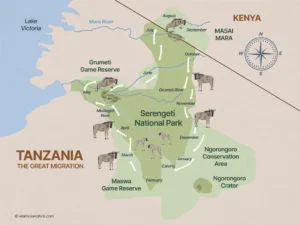
March marks the beginning of the long rains in Tanzania. Consequently, the landscape transforms almost overnight — dry golden savannah gives way to lush green plains that are genuinely beautiful. Meanwhile, the wildebeest herds begin moving north from the southern Serengeti toward the central plains, keeping game viewing productive throughout the month.
Photography conditions during March are outstanding. The combination of green grass, dramatic skies, and golden light creates images that look unlike anything taken during the dry season. Additionally, newborn animals of many species are present across the parks, adding an extra dimension to every game drive.
However, some roads — particularly in more remote areas — become muddy and occasionally impassable after heavy rain. Therefore, a when to visit Tanzania for wildlife plan for March should always include some flexibility in the itinerary to account for changing road conditions.
Best parks in March: Central Serengeti, Ngorongoro Crater, Tarangire
Overall rating: Moderate
April is the quietest month in Tanzania’s safari calendar. Since the long rains are at their peak, many camps either close for maintenance or reduce their rates significantly. Nevertheless, for travelers who value solitude and dramatic landscapes above all else, April has genuine and underappreciated appeal.
Because visitor numbers are at their lowest point of the year, those who do travel in April essentially have the parks to themselves. As a result, a private safari Tanzania in April feels extraordinarily exclusive — you can drive for hours without encountering another vehicle. Wildlife viewing remains productive, particularly in the Ngorongoro Crater, which stays excellent year-round regardless of rainfall. Furthermore, birdwatching during April is outstanding, with migratory species present in large numbers throughout the ecosystem.
Best parks in April: Ngorongoro Crater, Tarangire
Overall rating: Good to Very Good
May is one of Tanzania’s best-kept safari secrets, and experienced travelers know it well. The long rains begin easing toward the end of the month, and the landscape is at its most spectacularly lush. At the same time, the wildebeest herds are gathering in the western Serengeti corridor — building steadily toward the first Grumeti River crossings of the year.
Since May sits just before peak season, prices remain competitive while wildlife activity is building rapidly. Therefore, savvy travelers who book a private safari Tanzania in late May often secure exceptional value combined with very good wildlife viewing. Additionally, the western Serengeti corridor in May offers some of the most uncrowded game driving in the entire Northern Circuit, making the experience feel authentically wild.
Best parks in May: Western Serengeti, Tarangire, Ngorongoro Crater
Overall rating: Very Good
June marks a genuine turning point in the Tanzania safari season guide. The rains end, temperatures cool noticeably, and game viewing improves week by week as vegetation dries out and animals begin concentrating around permanent water sources.
In addition to improving general game viewing, the migration herds reach the western Serengeti corridor in June — bringing the first Grumeti River crossings of the year. These crossings are less famous than the Mara River spectacle further north, but they are equally dramatic and considerably less crowded. Meanwhile, Tarangire National Park begins to shine as the dry season draws thousands of animals to the Tarangire River. Elephant herds of fifty or more animals become a daily sight, while lions, leopards, and cheetahs concentrate wherever prey is most abundant.
Best parks in June: Western Serengeti, Tarangire, Ngorongoro Crater
| Wildlife Experience | June Rating |
|---|---|
| Grumeti River crossings | Very good |
| Tarangire elephants | Excellent |
| General game viewing | Very good |
| Crowd levels | Moderate |
| Value for money | Good |
Overall rating: Exceptional
July is when Tanzania’s safari season truly hits its stride. The dry season is fully established, game viewing across all parks is excellent, and — most excitingly — the migration herds reach the northern Serengeti, beginning the iconic Mara River crossing season.
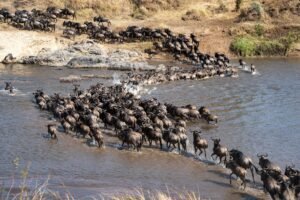
A when to visit Tanzania for wildlife search consistently highlights July as one of the top recommendations, and with very good reason. The northern Serengeti in July delivers the most dramatic wildlife spectacle available anywhere on Earth. Thousands of wildebeest gather nervously on the Mara River banks, the tension builds for hours, and then the crossing begins — a thundering, chaotic, heart-stopping event that leaves every single witness speechless.
However, July also marks the beginning of peak-season pricing and visitor numbers. For this reason, a private safari Tanzania in July is strongly recommended over any group tour. The ability to position your vehicle at the best riverbank spot, arrive before sunrise, and stay as long as needed makes an enormous difference to the quality of your experience.
Best parks in July: Northern Serengeti, Tarangire, Ngorongoro Crater
Overall rating: Exceptional
If witnessing a Mara River crossing is your primary goal, August is the best month for a private safari Tanzania without question. Crossing frequency reaches its annual peak during this month. In addition, the northern Serengeti is alive with extraordinary activity — massive lion prides, cheetah families, and enormous crocodiles all converge on the river zone simultaneously.
August also brings perfect game-viewing weather. Days are warm and dry, mornings are cool and crisp, and visibility across the open plains is extraordinary. For wildlife photography specifically, August light in the northern Serengeti is genuinely world-class and unlike anything available in other months. Because August is peak season, however, northern Serengeti camps book out many months in advance. Consequently, Glitzy Safaris strongly recommends booking your August private safari Tanzania at least six to nine months before your travel date.
Best parks in August: Northern Serengeti, Tarangire, Ngorongoro Crater
Overall rating: Exceptional
September is an outstanding month that many experienced safari travelers actually consider better than August. The Mara River crossings continue throughout September as the herds linger in the northern Serengeti before beginning their southward return. At the same time, visitor numbers begin easing slightly compared to the July and August peak, while wildlife activity remains consistently high.
In addition to the northern Serengeti spectacle, Tarangire National Park in September is truly extraordinary. Since the Tarangire River is the only permanent water source for hundreds of kilometres, it draws massive concentrations of elephants, buffaloes, zebras, and predators to its banks. Therefore, a combined northern Serengeti and Tarangire itinerary in September delivers perhaps the finest overall private safari Tanzania experience of the entire year.
Best parks in September: Northern Serengeti, Tarangire, Ngorongoro Crater
Overall rating: Very Good to Exceptional
October is the last full month of the dry season, and it delivers outstanding game viewing right across the Northern Circuit. Because water sources have been shrinking for months, the Tarangire River in October attracts some of the largest elephant concentrations in Africa — herds of one hundred or more animals gathering at the water’s edge create scenes of breathtaking scale and drama.
At the same time, the migration herds begin moving south through the eastern Serengeti during October. As a result, game viewing in the central and eastern Serengeti improves significantly as the returning wildebeest columns attract large predator followings. Across all three main parks, October consistently delivers exceptional wildlife viewing for private safari guests.
Best parks in October: Tarangire, Central and Eastern Serengeti, Ngorongoro Crater
Overall rating: Good
November brings the short rains to Tanzania — generally brief afternoon showers that green the landscape without seriously disrupting morning game drives. Since visitor numbers drop noticeably from the October peak, accommodation rates fall accordingly, making November one of the best value months on the Tanzania safari calendar.
Because the short rains are usually light and predictable, morning game drives are rarely affected by weather. Moreover, the landscape transforms quickly from dry golden savannah to fresh green, creating beautiful and distinctive photography conditions. Additionally, migratory bird species begin arriving in large numbers during November, making it one of the finest birdwatching months of the entire year for anyone with an interest in Tanzania’s extraordinary avian diversity.
Best parks in November: Tarangire, Ngorongoro Crater, Central Serengeti
Overall rating: Very Good
December offers an interesting and rewarding combination of conditions. The short rains are typically finishing by early December, and game viewing improves steadily through the month as conditions dry out. Meanwhile, the wildebeest herds are moving through the eastern Serengeti heading south toward their calving grounds, keeping the Serengeti active and interesting throughout.
Furthermore, December is particularly popular with families taking advantage of school holidays — making it a wonderful month for a family private safari Tanzania. The festive season atmosphere at Tanzania’s finest camps adds a genuinely special dimension to the experience. However, the Christmas and New Year period sees peak pricing return for two to three weeks. For this reason, booking well in advance for late December travel is strongly recommended.
Best parks in December: Eastern Serengeti, Tarangire, Ngorongoro Crater
| Month | Season | Top Experience | Crowd Level | Price Level |
|---|---|---|---|---|
| January | Hot dry | Calving season predators | Low–Medium | Medium |
| February | Hot dry | Peak calving, photography | Low–Medium | Medium |
| March | Long rains begin | Green landscape, moving herds | Low | Low–Medium |
| April | Long rains | Solitude, birdwatching | Very low | Low |
| May | Long rains end | Western corridor, value | Low | Low–Medium |
| June | Dry begins | Grumeti crossings, Tarangire | Medium | Medium–High |
| July | Peak dry | Mara crossings begin | High | High |
| August | Peak dry | Peak Mara crossings | Very high | Very high |
| September | Peak dry | Crossings continue, Tarangire | High | High |
| October | Late dry | Tarangire elephants | Medium–High | High |
| November | Short rains | Value, birdwatching | Low–Medium | Medium |
| December | Short rains end | Festive season, family safaris | Medium–High | Medium–High |
Different travelers prioritize different experiences. Therefore, here is a targeted recommendation based on what matters most to you personally.
| Your Priority | Best Months | Parks to Focus On |
|---|---|---|
| Mara River crossings | July – September | Northern Serengeti |
| Calving season drama | January – February | Southern Serengeti, Ndutu |
| Big Five in one day | Year-round | Ngorongoro Crater |
| Elephant herds | September – October | Tarangire |
| Photography conditions | February, June, September | All Northern Circuit |
| Best value | April – May, November | All parks |
| Fewest crowds | April – May | All parks |
| Family safari | July, December – January | Serengeti, Ngorongoro |
| Birdwatching | November – April | Tarangire, Lake Manyara |
The Serengeti rewards visitors in every single month of the year. However, the experience shifts significantly with the changing season, and knowing where to be within the park is just as important as knowing when to visit.
Tarangire is outstanding from June through October when the dry season concentrates thousands of animals along the Tarangire River. Nevertheless, the park offers rewarding wildlife viewing year-round and remains one of Tanzania’s most consistently underrated destinations regardless of season.
The crater is the one destination on the Tanzania safari calendar that delivers exceptional wildlife viewing in every single month without exception. Because the crater’s unique ecosystem supports a self-contained and permanent population of animals, no genuinely bad month exists for a crater game drive. As a result, the Ngorongoro Crater works perfectly as an anchor destination regardless of when you choose to travel.
Book northern Serengeti camps early. If your travel dates fall between July and October, secure your northern Serengeti accommodation first — everything else can be built around it. These camps consistently fill six to twelve months in advance.
Consider shoulder season seriously. January, February, and late May through June offer extraordinary wildlife combined with lower prices and fewer tourists. For many experienced travelers, these months are actually preferable to the busy peak season period.
Build flexibility into your itinerary. Wildlife does not follow a fixed schedule, and the single biggest mistake migration safari travelers make is over-scheduling every day. Therefore, leaving at least one buffer day near the river during crossing season gives your guide the ability to respond to fresh intelligence and reposition when something extraordinary is about to happen.
Trust your guide’s seasonal knowledge. A great guide knows where animals are moving week by week. At Glitzy Safaris, our guides continuously update their field knowledge throughout the year — so your itinerary always reflects current conditions rather than last season’s patterns.
What is the absolute best month for a private safari Tanzania? For Mara River crossings, August consistently delivers peak crossing frequency. For calving season drama, February is exceptional. For best overall value combined with excellent game viewing, late May and June offer a genuinely compelling case. Ultimately, the best month depends on your specific priorities — which is exactly why speaking with a specialist like Glitzy Safaris makes such a difference.
Is Tanzania good for safari in April and May? Yes — with the right expectations. These months offer extraordinary solitude, lush landscapes, competitive prices, and excellent birdwatching. Game viewing remains productive, particularly in the Ngorongoro Crater. However, some remote tracks become difficult after heavy rainfall, so flexibility in the itinerary is important.
How many days do I need for a Tanzania safari? A minimum of five days covers the Northern Circuit comfortably. Seven to ten days, however, allows you to follow the migration more effectively and adds meaningful flexibility for spontaneous wildlife opportunities.
Does a private safari make a real difference to the experience? Absolutely. A private safari Tanzania gives you the flexibility to respond to conditions in real time — repositioning for a river crossing, staying longer at a predator sighting, or adjusting your route based on fresh rainfall and animal movements. That level of responsiveness is simply not possible on a group tour, and it consistently makes the difference between a good safari and an extraordinary one.
Tanzania is a genuine year-round safari destination, and every month of the Tanzania safari calendar has something truly extraordinary to offer. Whether you want to witness the drama of a Mara River crossing in August, the heartwarming spectacle of calving season in February, or the peaceful solitude of a green season safari in May, Glitzy Safaris builds a private itinerary around your exact travel dates and personal priorities.
Our team knows the Northern Circuit intimately — the seasonal patterns, the best camp locations, the months when specific parks shine brightest, and the flexibility strategies that consistently deliver the most memorable experiences. In short, we know exactly how to put you in the right place at the right time.
Contact Glitzy Safaris today to start planning your perfect Tanzania safari. Tell us when you want to travel, and we will tell you exactly where to be.
Glitzy Safaris — Northern Tanzania’s Premier Private Safari Specialists, based in Arusha, Tanzania.