
Picture standing in an open-sided vehicle as a wall of wildebeest stretches to the horizon, or watching a leopard stretch out on an acacia branch as the light turns gold. That’s what a Tanzania safari from Sweden delivers — and it’s one of the most accessible long-haul safari trips available to Swedish travellers, with far shorter flight times than most people expect.
Tanzania isn’t crowded, and it isn’t staged. You get raw wilderness, real wildlife density, and landscapes that look much the same as they did a century ago. From the endless Serengeti plains to the Ngorongoro Crater and the beaches of Zanzibar, this country combines serious adventure with genuine relaxation — and it’s closer than Sweden’s other big bucket-list trips like Southeast Asia or Australia.
This guide covers what you actually need before booking: flights, costs in SEK, visa requirements, the best time to go, and how to structure the right itinerary.
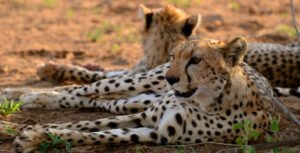
Tanzania consistently ranks as the world’s top safari destination, and it comes down to ecosystem scale. Its parks aren’t scattered — they’re connected, so wildlife density stays high across most of the country rather than concentrated in one small reserve.
The centerpiece is the Serengeti, home to the Great Migration. Each year, more than two million wildebeest, zebras, and gazelles move across the plains in a single relentless search for grazing — widely considered the greatest wildlife event on the planet.
Nearby sits the Ngorongoro Crater, a UNESCO World Heritage Site formed by a collapsed volcano. Its compact floor concentrates lions, elephants, and rhino into one viewable area, which makes for exceptional sightings in a short space of time.
Beyond game drives, Tanzania also offers:
For Swedish travellers used to longer flights for warm-weather escapes, Tanzania offers something rare: a shorter flight than many sun destinations, with a far bigger payoff.
There’s no direct flight from Sweden to Tanzania, but the connection is straightforward and notably shorter than from most other markets. Most Swedish travellers depart from Stockholm Arlanda, connecting through hubs like Amsterdam, Istanbul, Doha, or Addis Ababa.
The main gateway for safari travel is Kilimanjaro International Airport (JRO), sitting between Arusha and Moshi — the launch point for the Serengeti, Ngorongoro Crater, Tarangire, and Lake Manyara.
Total travel time typically runs 10–14 hours, one of the shortest routes among the major safari source markets. Round-trip economy fares generally land between SEK 8,000 and SEK 13,000, with November and January often pricing lower than the European summer months.
That’s a manageable flight for a trip of this scale — and most travellers say it’s one of the best value-for-distance journeys they’ve taken.
Pricing depends on travel style, season, and how much of the trip is private versus shared. Part of what you’re paying for is conservation — Tanzania’s national park fees go directly toward protecting these ecosystems.
Here’s a realistic SEK breakdown, excluding international flights:
If you want a personalized experience without ultra-luxury pricing, a private mid-range safari usually delivers the best value for the money.
Tanzania is a year-round destination, but what you want to see should drive your timing.
June–October (dry season): Animals cluster around rivers and waterholes as vegetation thins, making this the easiest time to spot wildlife — and the most popular season overall.
January–March (calving season): The southern Serengeti fills with newborn wildebeest, drawing predators in fast. High-action viewing, and a strong option for escaping the Swedish winter.
March–May (green season): Often overlooked, which means lower prices, fewer vehicles at sightings, and lush, photogenic landscapes after the rains.
Explore our Tanzania safari month by month guide, from Tanzania Safari in January to Tanzania Safari in December, to compare wildlife, weather, and the best travel seasons.
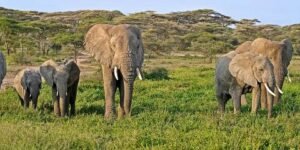
Tanzania’s flagship park and one of the world’s great wildlife ecosystems. Expect lions, leopards, cheetahs, elephants, buffalo, wildebeest, zebras, and giraffes, with the Great Migration as the headline event — though sightings stay strong year-round. A Serengeti safari from Sweden is the centrepiece of almost every itinerary we build.
A collapsed volcanic caldera packed with wildlife. Many travellers rank a single day inside the crater as the best day of their entire trip.
Quieter than the Serengeti, with giant baobab trees and some of Tanzania’s largest elephant herds — and far fewer vehicles competing for the same sighting.
Smaller but distinctive, with diverse habitats, strong birdlife, and a rare chance to spot tree-climbing lions. A great park to open a safari with.
Swedish passport holders need a visa to enter Tanzania, including Zanzibar.
The key details:
Get this sorted early. It’s a simple process, but easy to leave too late once flights and accommodation are booked.
This is where Tanzania separates itself from other safari countries: after days in the bush, you can fly straight to Zanzibar and trade dust for ocean.
Expect:
A Tanzania and Zanzibar holiday from Sweden is consistently the most-booked itinerary for couples and families — a manageable flight, a week of safari, and a few days on the beach before heading home.
A Tanzania safari from Sweden combines one of the shortest flight times of any major safari source market with one of the biggest payoffs in travel. Whether you’re watching sunrise break over the Serengeti, tracking elephants through Tarangire, or standing on the rim of Ngorongoro, Tanzania delivers wildlife encounters that feel completely unscripted.
For Swedish travellers chasing an authentic African adventure, few destinations match what Tanzania puts on the table.