
If you’re dreaming of witnessing thousands of wildebeest thundering across a crocodile-filled river, watching lions hunt at dusk, or sipping sundowners as elephants gather at a waterhole — Tanzania Safari in July is your answer.
July sits at the sweet spot of Tanzania’s dry season: skies are clear, wildlife is dense, the Great Migration is in full drama, and the beaches of Zanzibar are postcard-perfect. This guide covers everything you need to plan the perfect July safari Tanzania trip.
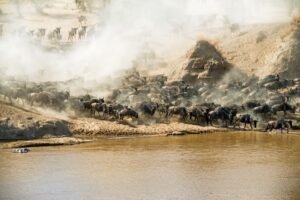
July is consistently rated one of the best months to safari in Africa — and for good reason. The dry season strips back vegetation, forcing wildlife to congregate around rivers and waterholes. That means more animals, better visibility, and more action.
Here’s why July stands out:
The trade-off? July is peak season, so parks are busier and prices are at their highest. Book 6–12 months in advance.
Understanding Tanzania weather in July helps you pack smart and plan better.
Pro tip: Always layer on morning game drives. It can feel near-cold at 6am in the Serengeti, then warm up to 28°C by midday.
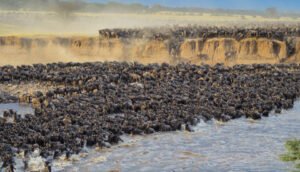
The Serengeti Migration in July is the number one reason most travellers choose this month.
By July, over 1.5 million wildebeest — along with hundreds of thousands of zebras and gazelles — have pushed northward through the Serengeti ecosystem toward the Mara River. This is where the spectacle reaches fever pitch.
River crossings are unpredictable — sometimes you wait hours, then 10,000 animals cross in 20 minutes. That tension and release is part of the magic.
The Lamai Wedge and Kogatende area in the Northern Serengeti are the prime spots. Staying at a camp close to the Mara River significantly increases your crossing sightings.
The undisputed highlight of a July safari Tanzania experience. The northern Serengeti offers Migration action, but the central and western corridors also deliver outstanding lion, leopard, and cheetah sightings. Add a hot air balloon safari over the plains at sunrise for an unforgettable perspective.
A natural wonder that delivers year-round. The crater floor is home to one of Africa’s densest concentrations of wildlife — including a small population of critically endangered black rhinos, lions, elephants, buffalo, hippos, and spectacular flamingo flocks. July’s clear skies make the drive down into the crater particularly beautiful.
July is arguably Tarangire’s best month. Elephants gather here in extraordinary numbers — sometimes herds of 200 or more around the Tarangire River. Ancient baobab trees create a surreal, prehistoric landscape. Less crowded than the Serengeti, and highly underrated.
Famous for its tree-climbing lions — a rare behaviour seen almost nowhere else — plus massive hippo pools, thousands of flamingos along the alkaline lake shore, and beautiful forest scenery. A great half-day or full-day addition to the northern circuit.
Tanzania’s largest national park and one of Africa’s best-kept secrets. July is prime season here — expect huge elephant herds, large lion prides, wild dogs, and vast wilderness with very few other tourists. A serious safari destination for those who want authenticity over crowds.
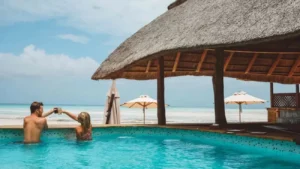
A Tanzania safari in July pairs beautifully with a Zanzibar beach extension, and July happens to be one of Zanzibar’s finest months.
What to expect in Zanzibar in July:
Top things to do in Zanzibar in July:
Most safari itineraries combine 5–7 nights on safari with 3–4 nights in Zanzibar — it’s the classic Tanzania formula and it works perfectly in July.
July is one of the two best months (alongside August and January–February) to summit Mount Kilimanjaro. The dry season brings clear skies, stable weather, dry trails, and the highest summit success rates of the year.
Popular routes in July include the Lemosho, Machame, and Rongai routes — all offering different scenery and difficulty levels. A standard climb takes 7–9 days. Combining a Kilimanjaro summit with a Serengeti safari is one of Tanzania’s ultimate bucket-list itineraries.
July is peak season, and prices reflect that. Here’s a realistic breakdown:
| Safari Type | Cost Per Person Per Day |
|---|---|
| Budget (camping/basic lodges) | $300 – $450 |
| Mid-range (comfortable lodges) | $500 – $900 |
| Luxury (premium tented camps) | $1,000 – $3,000+ |
These rates typically include accommodation, meals, game drives, and a guide. International flights, visas, and tips are additional.
Key money tips:
| Category | Items |
|---|---|
| Clothing | Neutral safari colours (khaki, olive, tan), light long-sleeve shirts, fleece jacket, warm layer for mornings |
| Footwear | Comfortable walking shoes or boots, sandals for the lodge |
| Sun protection | High-SPF sunscreen, wide-brim hat, UV-protective sunglasses |
| Photography | Camera with telephoto lens (200mm+), extra memory cards, dust-proof bag |
| Health | Antimalarial medication, DEET insect repellent, hand sanitiser |
| Other | Good binoculars (8×42 or 10×42), portable power bank, Zanzibar swimwear |
Is Tanzania a good safari destination in July? Yes — it’s one of the single best months of the entire year for safaris in Tanzania. Dry weather, peak Migration activity, and excellent wildlife visibility make it exceptional.
Where is the Great Migration in July? The herds are in the Northern Serengeti, approaching and crossing the Mara River into Kenya’s Masai Mara.
Is Tanzania crowded in July? The northern circuit (Serengeti, Ngorongoro, Tarangire) is busy in July. If you want fewer tourists, head to Ruaha or Nyerere in the south.
Is Zanzibar nice in July? Very much so. July is one of Zanzibar’s best months — warm, sunny, low humidity, and ideal for water activities.
Do I need a visa for Tanzania? Most nationalities require a visa. Tanzania now offers an e-visa that can be obtained online before you travel. Always check the latest requirements for your nationality.
Absolutely. A Tanzania safari in July delivers the full package: the spectacle of the Great Migration, outstanding Big Five game viewing, incredible photography conditions, a thriving beach scene in Zanzibar, and ideal Kilimanjaro climbing weather — all wrapped in Tanzania’s signature warm hospitality.
Yes, it’s peak season. Yes, it costs more and you need to book early. But for sheer wildlife drama and travel experience, very few destinations on Earth can match Tanzania in July.
Plan early, pack light layers, and prepare to be astonished.
Looking to book a Tanzania safari in July? Work with a reputable specialist operator who can tailor an itinerary across the Serengeti, Ngorongoro, and Zanzibar based on your budget and travel style.
Explore our Tanzania safari month by month guide, from Tanzania Safari in January to Tanzania Safari in December, to compare wildlife, weather, and the best travel seasons.