
When is the Best Time to Visit Tanzania?
Ask ten people the best time to visit Tanzania and you’ll get ten different answers, and they’ll all be right — for what each of them wanted to see. Someone chasing river crossings wants July through September. Someone chasing newborn wildebeest and predator action wants February. Someone trying to stretch a budget wants April. There isn’t one correct answer here, only a correct answer for your trip.
The short version: the dry season, roughly late June through October, is when wildlife viewing is at its peak across most of the country, and it’s the safest default if this is your first Tanzania safari and you just want strong, reliable sightings. But “best” depends heavily on what you’re optimizing for — price, crowds, birdlife, or a specific chapter of the Great Migration — and this guide breaks down all of it, month by month.
Understanding Tanzania’s Seasons
Tanzania runs on two rainy seasons rather than four conventional seasons. The “long rains” fall between April and May, bringing heavy afternoon downpours and prompting some safari camps to close temporarily. The “short rains” arrive in November and December, typically lighter and briefer, rarely disruptive enough to derail a trip.
Outside the rains, most safari regions stay warm during the day and cool at night, year-round — Tanzania doesn’t have the dramatic seasonal temperature swings travellers sometimes expect. The exceptions are at altitude and on the coast: temperatures can drop below freezing on Mount Kilimanjaro and Mount Meru, while the Indian Ocean coastline and lakeside areas stay hot and humid regardless of month.
For first-time visitors specifically, the dry season tends to be the safest bet, since thinning vegetation and shrinking water sources concentrate animals in predictable places. But understanding the difference between Tanzania’s high and low safari season is what actually lets you plan around your own priorities, not just the default recommendation.
Tanzania Safari High vs Low Season
| High or Peak Season | Low or Green Season | ||
|---|---|---|---|
| About June to October (long dry season) | About January to March and November to December | ||
| Highest rates | Lowest rates | ||
| Need to book well in advance | No need to book too far in advance | ||
| Cool and dry weather | Hot and occasionally wet weather | ||
| Not many baby animals around | Lots of baby animals around | ||
| Not many migrant birds to see | Fantastic time for bird-watching | ||
| Most crowded | Least crowded | ||
| Good photography conditions | Greenest, most scenic landscapes with the best light of the year for photography |
The trade-off here is worth sitting with. Peak Tanzania safari season gets you reliability and easy wildlife viewing, but you’re paying premium rates and sharing sightings with more vehicles. The green season trades some of that predictability for lower prices, dramatically fewer crowds, newborn animals everywhere, and landscapes that frankly photograph better than the dustier dry-season version most brochures show you.
The Wildebeest Migration Calendar
| Event | Approximate Timing |
|---|---|
| Calving / birthing season | January to March |
| Intense predator activity | January to March |
| Rutting season | January to March |
| Grumeti River crossings | May to July |
| Mara River crossings | July to September |
Worth being direct about this: the Great Migration is a continuous, circular movement, not a scheduled event, and river crossings in particular are genuinely unpredictable. Herds can linger in one spot for weeks or cross the same river multiple times in a single day. Anyone promising you a guaranteed crossing on a specific date isn’t being fully honest with you — what a good itinerary does is position you in the right area during the right window, not promise a moment nature doesn’t actually schedule.
Best Time to Visit Tanzania: Month-by-Month
Travelling to Tanzania during January to March
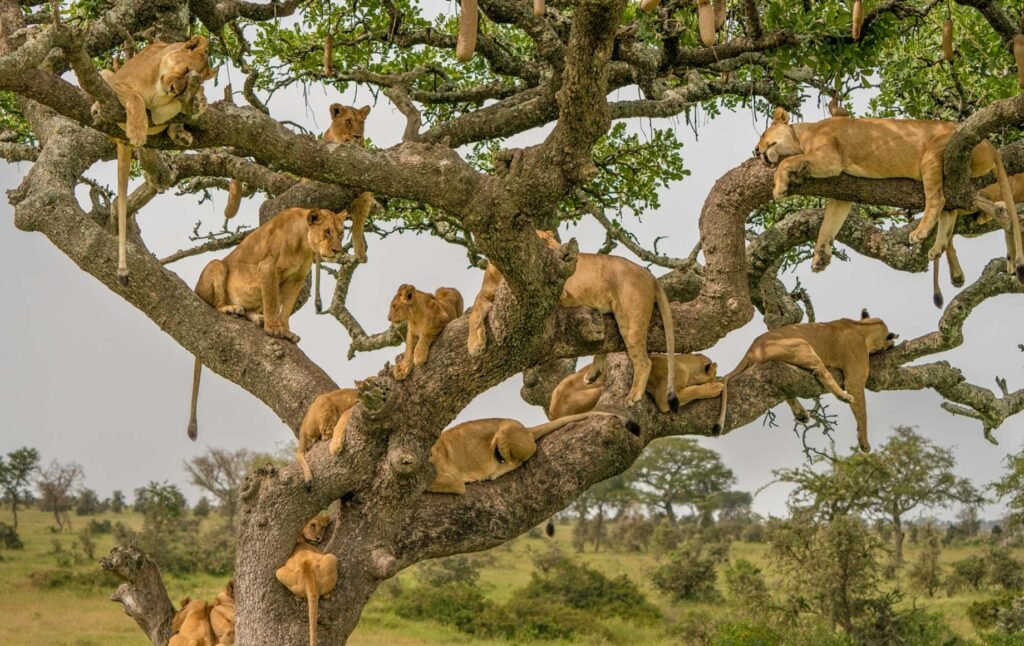
January is one of the best times to visit Tanzania’s coastline if a beach extension is part of your plan — Zanzibar delivers powder-soft sand and clear turquoise water at its most reliable. Inland, this is also when calving season begins, as herds move into the southern Serengeti to give birth.
February brings hot, humid weather and the height of calving season — roughly 500,000 wildebeest calves are born in this window, which in turn draws heavy predator activity from lions, cheetahs, and hyenas. The southern Serengeti plains are genuinely dramatic during this month, newborns finding their feet under near-constant predator surveillance.
March is one of the hottest months of the year. The first half tends to stay dry, though the long rains occasionally arrive early. As they do, the landscape shifts fast into lush green, a striking contrast to the months before it. The Ngorongoro Highlands see brief afternoon showers with clear, cool mornings. March also happens to be a strong window for the best time to climb Kilimanjaro, since crowds thin out and the mountain’s lower slopes turn vividly green.
Visiting Tanzania in April & May
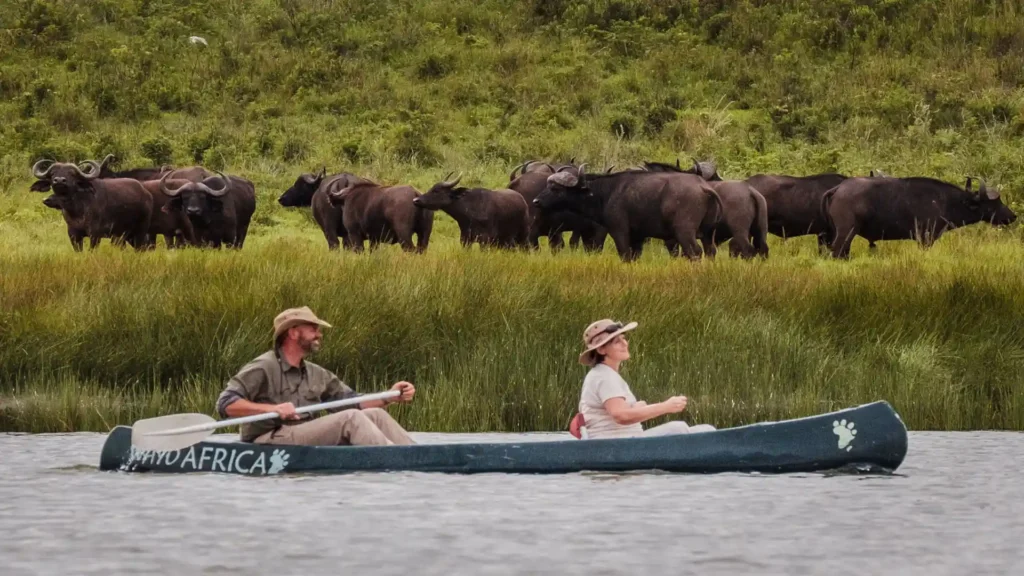
April is the wettest month of the year in Tanzania, with frequent afternoon thunderstorms and occasional overnight storms. Humidity peaks, particularly in the western and southern parks, and skies stay overcast more often than not. It’s not the strongest month for wildlife viewing, but it’s genuinely the best month for budget-conscious travellers — rates drop and crowds thin out considerably.
May opens with lingering rain, but conditions dry out steadily as the month progresses toward June’s dry season. This is also a transition month for the migration, with herds moving from the southern Serengeti into the western corridor — a quieter, less-photographed stretch of the journey that suits travellers who’d rather avoid the bigger crowds further north.
Visiting Tanzania from June to August
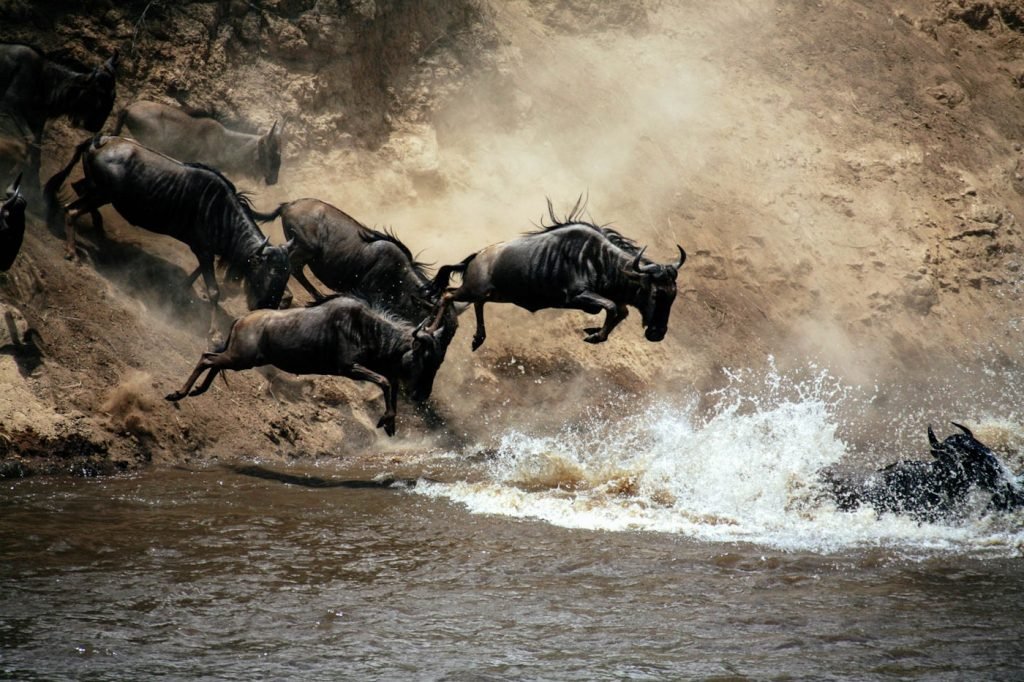
June marks the start of Tanzania’s safari season proper, and it’s genuinely one of the best windows for a luxury safari in Tanzania. The rains have ended, the landscape starts shifting from green to gold, and thinning vegetation makes wildlife dramatically easier to spot. This is also roughly when the migration pauses at the Grumeti River, with herds gathering ahead of their crossing attempts.
July is peak season at its strongest — excellent weather, exceptional game viewing, and the migration typically pushing into the northern Serengeti ahead of the Mara River crossings into Kenya. If you’re weighing Tanzania against Kenya for a Serengeti safari, July is a natural month to consider combining both.
August continues that peak intensity, with visitor numbers climbing across the Northern Circuit — Tarangire, Ngorongoro Crater, Serengeti — and on Zanzibar’s beaches. Wildlife viewing is about as strong as Tanzania gets this month, and the Mara River crossings are typically in full swing.
Visiting Tanzania in November & December
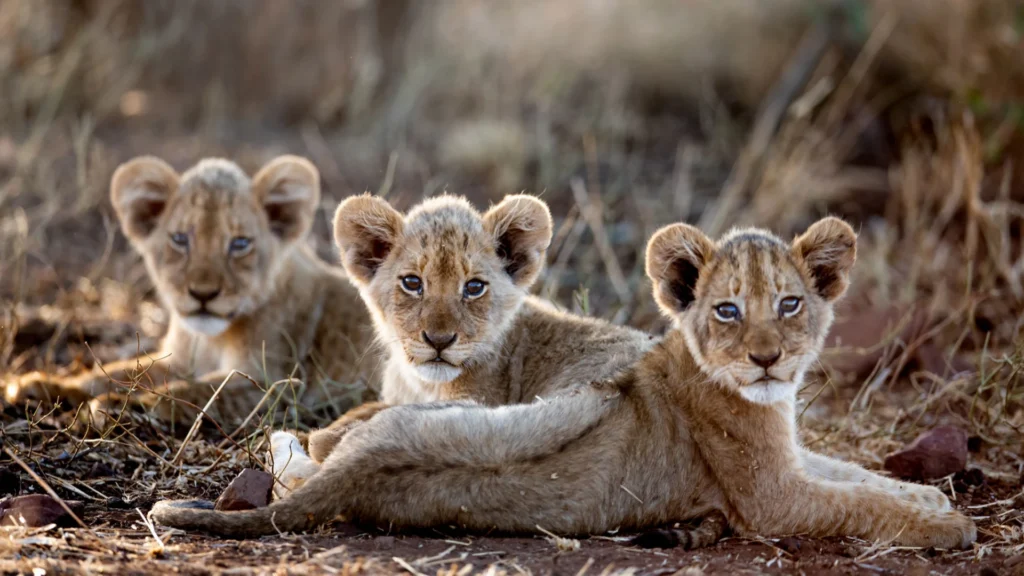
November is genuinely underrated. Short afternoon thunderstorms are common but rarely disruptive for long, the northern parks stay excellent for game viewing year-round regardless, and this is a strong window for exploring off-the-beaten-path destinations with noticeably fewer crowds and lush, green scenery.
December falls within the short rains. Early in the month tends to stay quiet, though visitor numbers pick up around the holidays. It’s an excellent month for bird-watching as migratory species begin arriving, particularly in Nyerere and Tarangire National Parks. The migration itself returns to the southern Serengeti’s short grass plains during this period, herds gathering ahead of calving — a strong, dramatic month for a Serengeti safari if you don’t mind sharing it with the holiday crowd.
So, What's Actually the Best Time to Visit Tanzania?
If you want the simplest possible answer: June through October for reliable, classic safari conditions. If you want newborn animals and intense predator action, February. If you want river crossings specifically, July through September, with the caveat that nature doesn’t run on a fixed schedule. If you want lower prices, fewer people, and genuinely beautiful green-season light, look at April, November, or December.
The honest version of “best” depends on what you’re prioritizing — and that’s really the point of a month-by-month breakdown instead of a single recommendation.
Plan Your Trip Around the Right Season with Glitzy Safaris
With more than 11 years of experience building Tanzania itineraries, we time every trip around what a traveller actually wants to see, not a generic seasonal default. Whether that’s positioning you for the Mara River crossings, a green-season trip built around lower rates and lush scenery, or a Kilimanjaro climb during one of the quieter weather windows, get in touch and we’ll build the itinerary around the calendar that fits your priorities.